

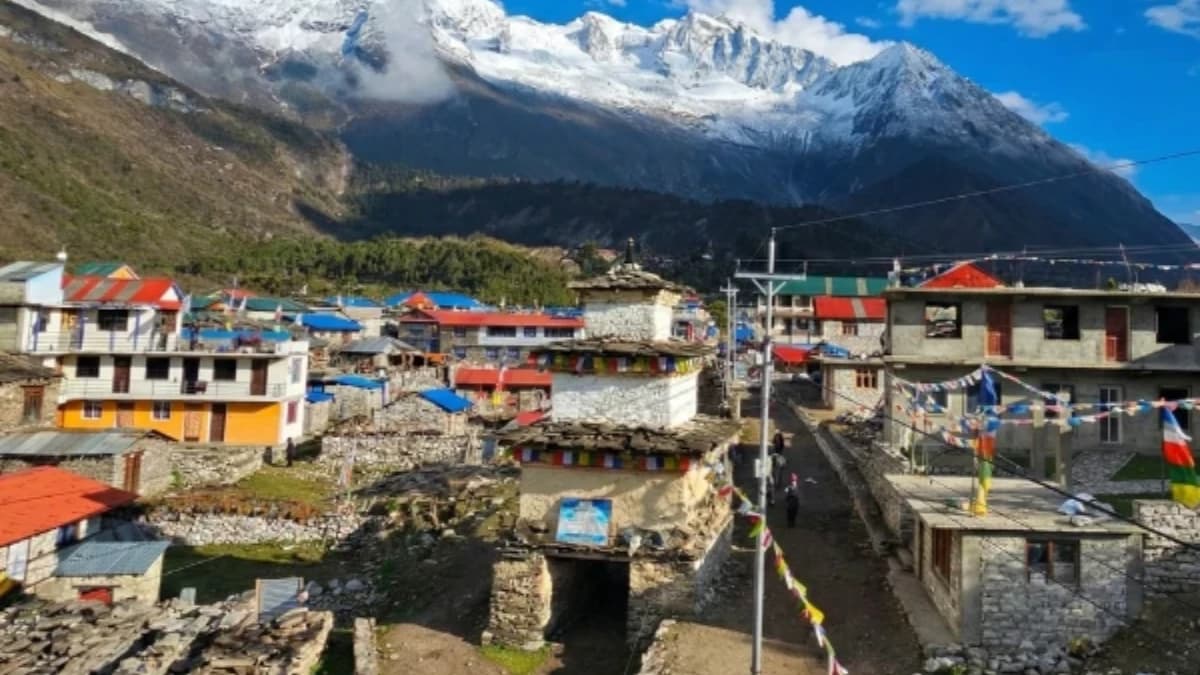
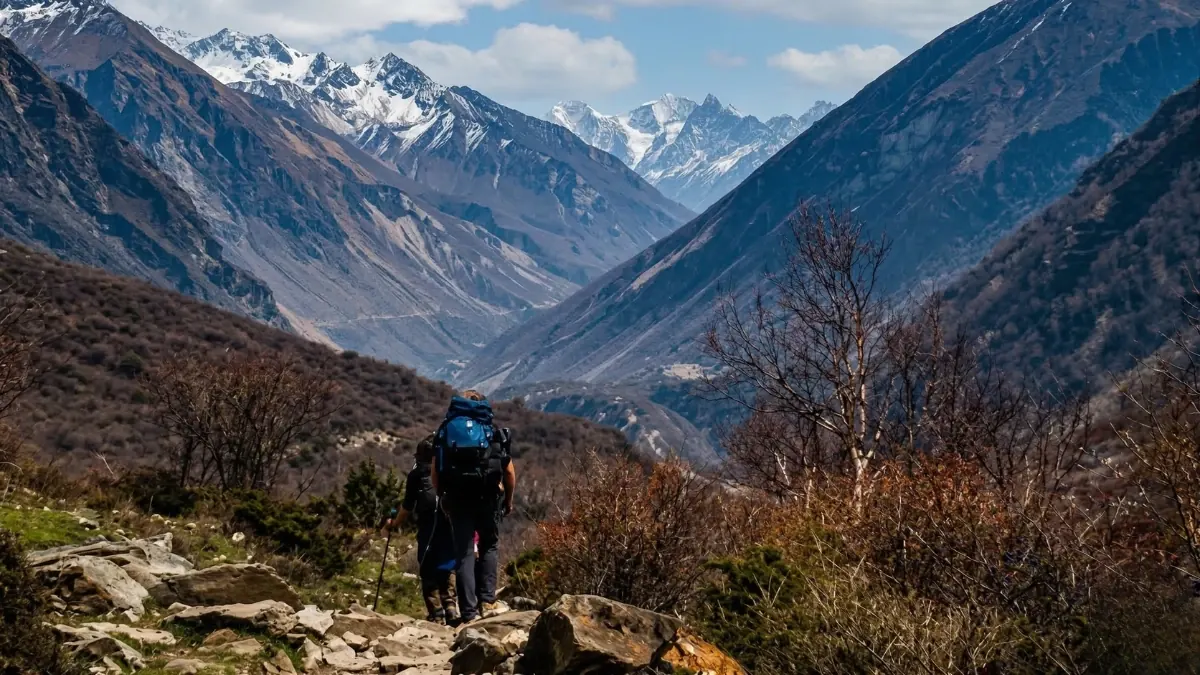
The trail rounds a bend in the Budhi Gandaki valley and the world opens. For five days you have been walking through a gorge, narrow, steep-walled, the river roaring below, the sky a strip of blue between rock faces that rose hundreds of metres on either side. The villages were small. The teahouses were basic. The trail was often carved into cliff faces or balanced on ledges above drops that you tried not to look at. And now, suddenly, the gorge releases you into a broad, flat valley ringed by mountains so close and so high that they create their own weather, clouds forming on their flanks, dissolving, forming again, while the valley floor sits in sunshine and the wind carries the sound of monks chanting from a monastery on the hillside above.
Samagaon. The name is Tibetan. The architecture is Tibetan, flat-roofed stone houses with prayer flags on every roof and firewood stacked against every wall. The faces of the people are Tibetan, broad cheekbones, weathered skin, eyes that carry the specific calm of people who live at 3,530 metres in the shadow of the world's eighth highest mountain and consider this normal. And the monastery on the hill, Pungyen Gompa, is Tibetan in tradition, in practice, and in the continuity of its prayer that stretches back centuries to a time when this valley was part of the Tibetan cultural sphere and the border between Nepal and Tibet was a line on no map.
Samagaon is the cultural and logistical centre of the Manaslu Circuit. It is where trekkers spend their acclimatisation day, the critical rest day before pushing to Samdo and then to the Larkya La pass at 5,160 metres. It is where the restricted area permit's value becomes tangible, the quiet, the cultural authenticity, the absence of the crowds that the Annapurna Circuit's open-access policy allows. And it is where the Manaslu Circuit transitions from river gorge trek to high-altitude mountain crossing, from the green, vertical world below to the brown, horizontal world above.
What Is Samagaon Village Like?
Samagaon is one of the largest settlements on the Manaslu Circuit, approximately two hundred houses spread across a broad terrace above the Budhi Gandaki river. The village is divided into upper and lower sections, connected by stone paths that wind between houses and through fields where barley and potatoes grow in the short summer season.
The houses are distinctively Tibetan. Flat roofs, used for drying grain, storing firewood, and socialising in summer, replace the pitched roofs of the lower Nepali villages. The walls are thick stone, whitewashed or left natural, with small windows that minimise heat loss in the long, cold winters. Prayer flags are everywhere, on rooftops, strung between houses, fluttering from poles at the village edges. Mani walls, long walls of carved prayer stones, each inscribed with the mantra Om Mani Padme Hum, line the trails through and around the village. Walk on the left side of the mani walls, keeping the wall to your right, this is not a suggestion but a cultural and religious requirement that your guide will enforce.
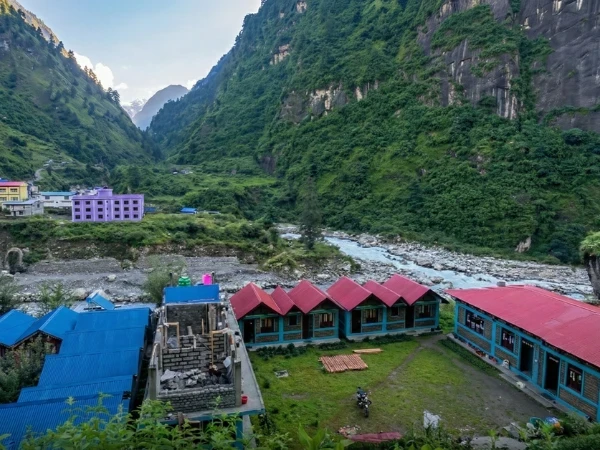
The economic life of Samagaon was historically based on trade with Tibet via the Larkya La and other passes. Salt, wool, and livestock came south from Tibet; grain, iron, and cotton went north. When the Chinese government restricted border crossing in the mid-twentieth century, the trade economy collapsed and was replaced, over decades, by the trekking economy that sustains the village today. The teahouses that serve trekkers occupy spaces that once stored trade goods. The guides who lead trekking groups descend from the traders who led yak caravans over the passes.
What Is Pungyen Gompa Above Samagaon?
The monastery sits high above the village on the way toward the Manaslu glacier, and the walk up is four to five hours on the round trip rather than the short stroll it is sometimes described as. It is a serious acclimatisation day in its own right, and it delivers both the monastery and the views that make the climb worthwhile. Pungyen Gompa is a Nyingma Buddhist monastery, the oldest school of Tibetan Buddhism, associated with Guru Rinpoche, who is credited with bringing Buddhism to Tibet in the eighth century.
The monastery is small, a single prayer hall with a courtyard, surrounded by monks' quarters and a chorten (Buddhist reliquary). The prayer hall contains wall paintings of deities and protectors, a central Buddha statue, and butter lamps that burn continuously. If you visit during morning or evening prayers, you will hear the monks chanting, a deep, resonant drone accompanied by drums and cymbals that carries across the valley and that can be heard from the village below on still mornings.
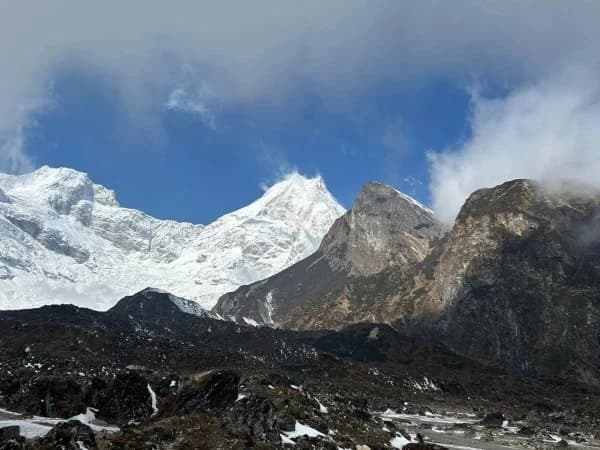
The views from the monastery include Manaslu (8,163 metres), the eighth highest mountain in the world, dominating the northern horizon with a massive snow-covered bulk that makes the other peaks in the valley look modest. The monastery was positioned here deliberately, facing the mountain, framing it between prayer flags and chortens, creating a visual relationship between the sacred building and the sacred landscape that Tibetan Buddhist architecture considers essential.
What Should You Do on Your Rest Day in Samagaon?
The rest day at Samagaon is not optional. It is medically necessary. You have been gaining altitude steadily for five days, from Soti Khola (700 metres) to Samagaon (3,530 metres), and your body needs a full day at this altitude to process the physiological changes that acclimatisation demands. Your kidneys are adjusting blood chemistry. Your bone marrow is producing more red blood cells. Your breathing patterns are recalibrating. These processes take time, and the time is the acclimatisation day.
The day is not spent in bed. Active acclimatisation, climbing to a higher altitude during the day and returning to sleep at 3,530 metres, is more effective than passive rest. The standard acclimatisation hike from Samagaon is to Pungyen Gompa and beyond, climbing to approximately 4,000-4,200 metres on the hillside above the monastery, spending an hour at the higher altitude, and descending to Samagaon to sleep. This "climb high, sleep low" pattern is the foundation of safe altitude acclimatisation on every Himalayan trek.
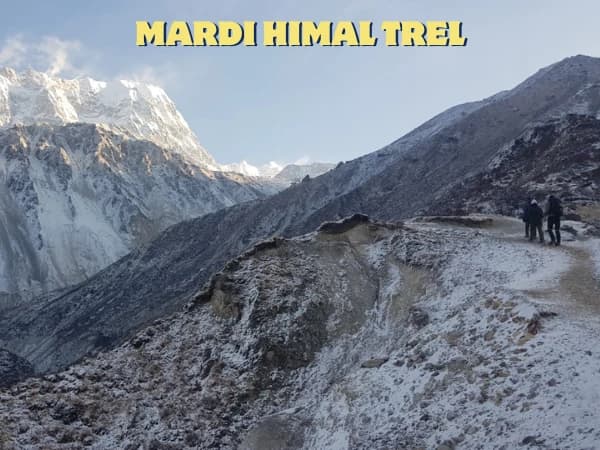
An alternative acclimatisation hike, for trekkers with energy and interest, is the walk toward Manaslu Base Camp. The trail heads north from Samagaon along the Budhi Gandaki valley, passing through yak pastures and moraine terrain with increasingly close views of Manaslu's glaciated flanks. The walk to the base camp area takes three to four hours each way and reaches approximately 4,800 metres, excellent altitude exposure for acclimatisation. Most trekkers walk partway and turn back, using the hike as acclimatisation rather than a base camp visit.
Where to Stay and Eat in Samagaon
Samagaon has five or six teahouses, more than any other settlement on the Manaslu Circuit's upper section. The teahouses are better equipped than the lower gorge stops, larger rooms, thicker blankets, common rooms with stoves, and menus that include Tibetan dishes alongside the standard Nepali fare.
Tibetan bread, round, flat, fried in oil and served with yak butter tea, is a Samagaon speciality. Yak butter tea (po cha) is an acquired taste, salty, fatty, and warming in a way that sweet tea cannot match at altitude. Thukpa, Tibetan noodle soup with vegetables and sometimes meat, is hearty and filling. And tsampa, roasted barley flour mixed with tea into a thick paste, is the traditional energy food of the Tibetan plateau, eaten by Sherpas and porters as a quick, calorie-dense snack.
The common rooms at Samagaon are social centres, trekkers, guides, porters, and locals gathered around the stove in the evening, sharing food, stories, and the particular warmth that altitude and remoteness create between strangers. The Manaslu Circuit's smaller trekker numbers mean that the common room at Samagaon holds perhaps ten to fifteen people rather than the thirty to forty at an Annapurna Circuit teahouse. The conversations are more intimate. The connections are deeper. And the guides, who know each other from previous seasons, exchange information about trail conditions above, snow on the Larkya La, and the state of the teahouses at Dharamsala with the specific directness of professionals comparing notes.
What Can You See Above Samagaon?
From Samagaon, the trail continues north to Samdo (3,860 metres), a half-day's walk through increasingly barren terrain. Samdo is the last settlement before Dharamsala (Larkya Base Camp, 4,460 metres) and the Larkya La crossing. The character of the trek changes above Samagaon, the valley broadens, the vegetation thins, the mountains dominate every view, and the remoteness deepens. Samagaon is the last village with any significant services, the last place to buy batteries, charge devices affordably, or eat food that was not carried from days below.
The two days above Samagaon, Samdo and Dharamsala, are preparation days. The body acclimatises. The mind prepares. The gear is sorted and checked. And the Larkya La, which has been an abstract concept since the trek began, becomes a visible, physical reality, a notch in the ridge above, marked by snow, visible from the trail, getting closer with each day's walking.
The Restricted Area
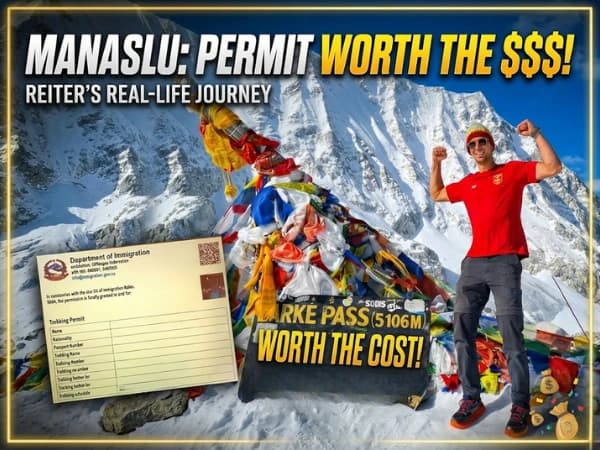
Samagaon sits within the Manaslu Conservation Area's restricted zone. The restricted area permit, one hundred US dollars per person per week in peak season, limits the number of trekkers who enter this valley. The result is visible at Samagaon: quieter trails, smaller teahouses, less commercial infrastructure, and a cultural atmosphere that is closer to the pre-tourism Himalaya than anything on the Annapurna Circuit or the EBC trail.
The restriction is not just about numbers. It is about pace. The Manaslu Circuit moves at a speed that the Annapurna Circuit no longer enforces, a speed dictated by the terrain, the altitude, and the limited infrastructure rather than by the schedule. At Samagaon, the pace is visible: trekkers walk in ones and twos, not crowds. The teahouse owner has time to talk. The guide has time to explain the monastery, the village history, the mountain above. And the mountain, Manaslu, the eighth highest in the world, framed by prayer flags and monastery walls, has time to be looked at properly, without the queue of other trekkers waiting for the viewpoint.
This is what the restricted area permit buys. Not a trek. An experience. And Samagaon, where the gorge opens, the mountains appear, and the Tibetan culture of the upper valley reveals itself with a quiet confidence that has nothing to prove, is where the experience begins to justify the price.
Samagaon is the cultural heart of the Manaslu Circuit Trek and the acclimatisation stop before Larkya La. Trekkers on the Manaslu with Nar Phu Valley Trek also pass through here on the 21-day extended route.
Samagaon is the cultural heart of the Manaslu Circuit. The Tibetan monastery, the yak herders, the stone-walled houses with flat roofs: it is the Manaslu equivalent of Namche Bazaar, except without the bakeries and pool tables. Your acclimatisation day here is spent walking to Birendra Lake, visiting the monastery, and watching Manaslu turn gold at sunset. It is one of the best rest days on any trek in Nepal.
Samagaon is the acclimatisation stop on our Manaslu Circuit Trek.
WhatsApp:+977 9810351300
Email:[email protected]
Written by Shreejan Simkhada, CEO of The Everest Holiday and third-generation Himalayan guide. TAAN Member #1586.
Samagaun is the cultural heart of Manaslu Circuit. Our Manaslu Circuit Trek (12 Days) is private (your group only, no strangers), 2027 dates open, From USD $799. WhatsApp us for tailored 2027 dates and current departures.
Continue planning your trek
This is one stop on the Manaslu Circuit trail. For the full route, read our complete Manaslu region guide. When you are ready for dates and prices, see the Manaslu Circuit Trek (12 days) or WhatsApp us directly. We reply personally.
 Chat with Shreejan