

Short answer: Nar (4,110 m) is a cliff-side stone village in the restricted Nar Phu Valley, a side valley entered from Koto on the Annapurna Circuit, with old houses, monasteries and high peaks all around. Few trekkers reach it because of the permit and the remoteness. Visit it on our Nar Phu Valley trek.
The village clings to a cliff. Not metaphorically, literally. Nar sits on a narrow ledge halfway up a canyon wall at 4,110 metres, its stone houses stacked vertically against the rock face like a medieval fortress that forgot to stop building upward. Below, the Nar Khola drops through a gorge so deep that the river is audible but invisible. Above, the canyon walls rise another thousand metres to ridgelines that carry snow year-round. And across the valley, the peaks of the restricted Nar Phu region, unnamed, unclimbed, and almost entirely unknown to the trekking world, stand in a semicircle of ice that would be famous anywhere else but here is simply the view from the village.
Nar is one of Nepal's most extraordinary hidden settlements. Located in the restricted Nar Phu Valley, a side valley accessible from the Annapurna Circuit trail at Koto, the village was closed to foreigners until 2003. The restricted area permit (USD 100 for the first week in autumn, USD 75 from December to August) and the requirement to walk with a licensed guide keep visitor numbers low: perhaps five hundred to a thousand trekkers per year reach Nar, compared to the thirty thousand who walk the Annapurna Circuit below. The old rule requiring a minimum of two trekkers was scrapped on 22 March 2026, so the permit can now be issued to a single trekker.
The result is a village that feels medieval. Not preserved medieval, not a museum or a heritage restoration. Living medieval. The houses are built from the same stone as the cliff they cling to. The monastery at the top of the village is active, monks chant at dawn and dusk, butter lamps burn continuously, and the prayer flags that connect the monastery to the houses below carry mantras in a wind that has been blowing through this canyon since before the village existed. And the people, Nar-Phowa, a Tibetan-heritage community of perhaps three hundred, live in a way that the rest of Nepal left behind decades ago: no road, no mobile coverage, no electricity grid, and a relationship with the landscape that is measured in centuries rather than trekking seasons.
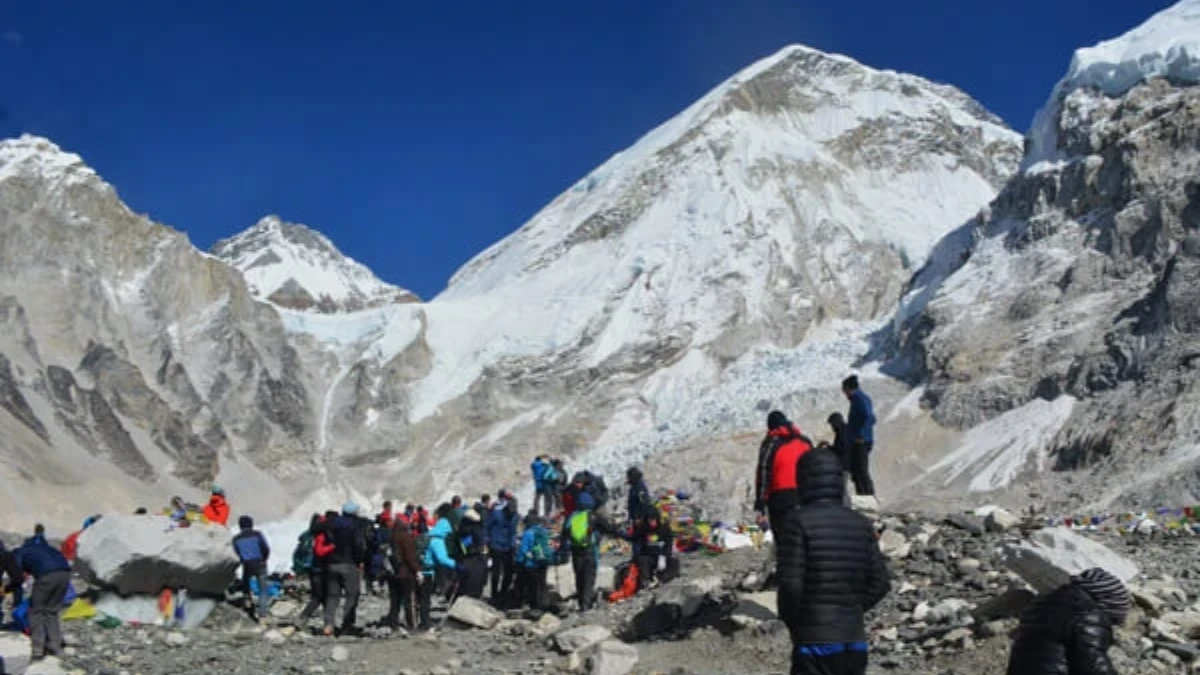
| Detail | Fact |
|---|---|
| Altitude | 4,110 m |
| Region | Nar Phu valley, Manang district (restricted area) |
| What it is | A walled Tibetan-Buddhist village above the Nar Khola gorge |
| How you reach it | From Koto on the Annapurna Circuit, via Meta, Phu and Nar Phedi |
| Onward | Over the Kang La (5,322 m) to Ngawal on the Annapurna Circuit |
| Permit | Nar Phu Restricted Area Permit ($100/week Sep–Nov, $75/week Dec–Aug) plus ACAP |
| Trek | Nar Phu Valley Trek |
How Do You Get to Nar Village?
The trail to Nar diverges from the Annapurna Circuit at Koto (2,600 metres), approximately one day's walk above Chame. From Koto, the trail heads north into the Nar Phu Valley, climbing through forest, crossing the Nar Khola on suspension bridges, and entering a landscape that changes rapidly from the green, forested valleys of the Circuit to the brown, arid canyons of the restricted area.
The walk from Koto to Nar takes two to three days. The trail is well-maintained but steep in sections, and the altitude gain, from 2,600 metres at Koto to 4,110 metres at Nar, requires careful acclimatisation. Most itineraries include an overnight at Meta (3,560 metres) or Kyang (3,800 metres) before reaching Nar, providing the gradual altitude gain that safe trekking demands.
The approach to Nar is the approach itself, as remarkable as the destination. The canyon narrows as you walk north. The vegetation thins. The rock changes colour, from the green-grey of the lower valley to the red and ochre of the upper canyon, where the sedimentary layers are visible in the cliff walls like pages in a geological book. And the trail, which was a forest path at Koto, becomes a ledge carved into the canyon wall, narrow, exposed, and dramatic in a way that the standard Circuit trail (which follows a valley floor) never is.
What Is Nar Village Like?
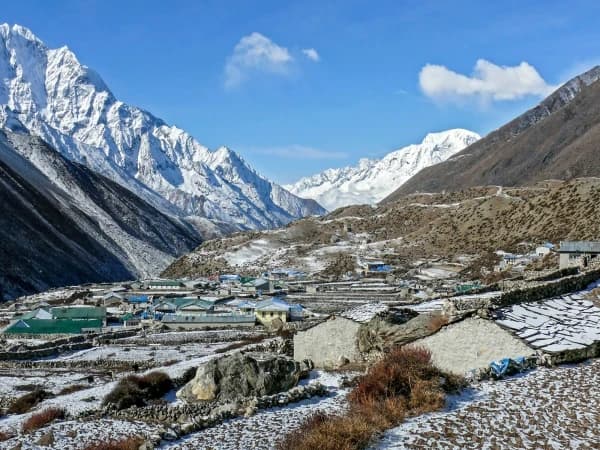
Nar sits at 4,110 metres on a ledge above the Nar Khola. The village is small, approximately fifty to sixty houses arranged in tiers up the cliff face, connected by narrow stone paths and ladders that make navigation vertical rather than horizontal. The houses are Tibetan, flat roofs, thick walls, small windows, and they blend so completely with the cliff that from a distance the village is almost invisible, distinguishable from the rock only by the prayer flags on the rooftops and the smoke rising from the kitchen chimneys.
The gompa, the Buddhist monastery, occupies the highest position in the village, as Tibetan monastery architecture requires. The monastery is small but active, served by a handful of monks who maintain the prayer hall, tend the butter lamps, and conduct the daily prayers that structure the village's spiritual life. The wall paintings in the prayer hall are old and faded but intact, Buddhist deities and protectors rendered in the specific style of the Nar Phu tradition, which blends Nyingma practices with local elements that predate the formal establishment of Buddhism in the region.
The people of Nar, the Nar-Phowa, are culturally Tibetan but distinct from both the Sherpa and the Manangba (the people of nearby Manang on the Circuit). Their language is a Tibetan dialect. Their religion is Nyingma Buddhism with strong Bon influences. And their economy, historically based on trans-Himalayan trade with Tibet, now based on yak herding and the trekking permits that their restricted status generates, supports a way of life that is closer to medieval Tibet than to modern Nepal.
The Kang La Connection
From Nar, experienced trekkers cross the Kang La pass (5,322 metres) and descend to Ngawal on the Annapurna Circuit, above Manang. Walked as a loop, the trip combines the Annapurna Circuit's approach to Koto, the Nar Phu cultural immersion, the Kang La alpine crossing, and the return down the Annapurna Circuit through Manang, in a single two-to-three-week trek. It is one of the most complete trekking experiences in Nepal.
The alternative, and the more common choice, is to visit Nar and its sister village Phu (4,080 metres, one day further north), then return to Koto and rejoin the Annapurna Circuit for the Thorong La crossing. This option adds four to five days to the standard Circuit itinerary but provides a restricted-area experience that most Circuit trekkers never encounter. Related: Kang La Pass: The High Himalayan Crossing Between Nar Phu Valley and the Manaslu Circuit.
Phu Village
One day's walk north of Nar, at 4,080 metres, Phu is the more remote of the two Nar Phu villages. The architecture is similar to Nar, cliff-side construction, Tibetan style, but the setting is different: Phu sits in a broader valley with views of the peaks that mark the Nepal-Tibet border. The monastery at Phu, Tashi Lakhang Gompa, is older and more significant than Nar's, and the village's proximity to the Tibetan border gives it a frontier quality that Nar, tucked into its canyon, does not have.
The walk from Nar to Phu takes four to five hours through increasingly barren terrain. The trail crosses high, dry valleys and passes chortens and mani walls that mark the boundaries between the settled world and the wilderness above. Phu is the northernmost point that most Nar Phu trekkers reach, beyond it, the trail continues toward the Kang La or turns south back to the Circuit.
What Do You Need to Know About Nar Village?
Altitude: Nar 4,110m, Phu 4,080m. Permits: Nar Phu restricted area permit (USD 100 for the first week in autumn, USD 75 from December to August) plus ACAP permit (NPR 3,000 for foreign nationals and NPR 1,000 for SAARC nationals, roughly twenty and seven US dollars). Licensed guide required, no minimum group size since 22 March 2026.
Duration: four to five days as a side trip from the Annapurna Circuit (Koto to Nar to Phu to Koto). Seven to eight days if combined with Kang La crossing to Manaslu.
Accommodation: basic teahouses at Nar and Phu. Simpler than the Circuit, smaller rooms, fewer menu options, no electricity grid (solar only).
Best season: October-November (clear, cold). March-May (warmer, some snow possible at the higher altitudes).
Why Nar
The Annapurna Circuit is one of the great treks of the world. But the Circuit in 2026 is not the Circuit of twenty years ago, road construction has altered the lower sections, trekker numbers have grown, and the infrastructure has evolved from basic teahouses to lodges with Wi-Fi and pizza ovens. The Circuit remains magnificent. But it has lost some of the remoteness that originally defined it.
Nar has not lost that remoteness. The village sits in a restricted area, on a cliff, in a canyon, at 4,110 metres, with no road, no Wi-Fi, and no pizza. The houses are stone. The monastery is ancient. The people are Nar-Phowa. And the thrill of arriving, after two days of walking through a canyon that narrows to a slit and then opens to reveal a village clinging to a wall like a hallucination of what a Himalayan village should be, is something that the standard Circuit, for all its grandeur, has surrendered to accessibility.
Nar is the Circuit's hidden room. The door is at Koto. The permit costs USD 100 for the first week in autumn. And what waits behind the door, a cliff village, a canyon, a monastery on a ledge, and a community that has been living vertically for centuries, is the Annapurna experience that most Circuit trekkers walk past without knowing it exists.
Nar Village is the heart of the Nar Phu Valley Trek (9 days), a restricted-area route that branches off the Annapurna Circuit near Koto.
Nar village sits at 4,110 metres on a cliff edge above the Nar Khola gorge. The stone houses blend into the rock, the prayer flags stretch across the valley, and the silence is the kind that makes you notice your own heartbeat. Getting here requires a detour from the Annapurna Circuit and a restricted area permit. Both are worth it.
Nar is on our Nar Phu Valley Trek.
WhatsApp:+977 9810351300
Email:[email protected]
Written by Shreejan Simkhada, CEO of The Everest Holiday and third-generation Himalayan guide. TAAN Member #1586.
Nar village is the high heart of the Nar Phu valley. Our Manaslu with Nar Phu Valley Trek (21 Days) is private (your group only, no strangers), 2027 dates open, From USD $1438. WhatsApp us for tailored 2027 dates and current departures.
Continue planning your trek
This is one stop on the Nar Phu Valley trail. For the full route, read our restricted-area permits guide. When you are ready for dates and prices, see the Nar Phu Valley Trek (9 days) or WhatsApp us directly. We reply personally.
 Chat with Shreejan