

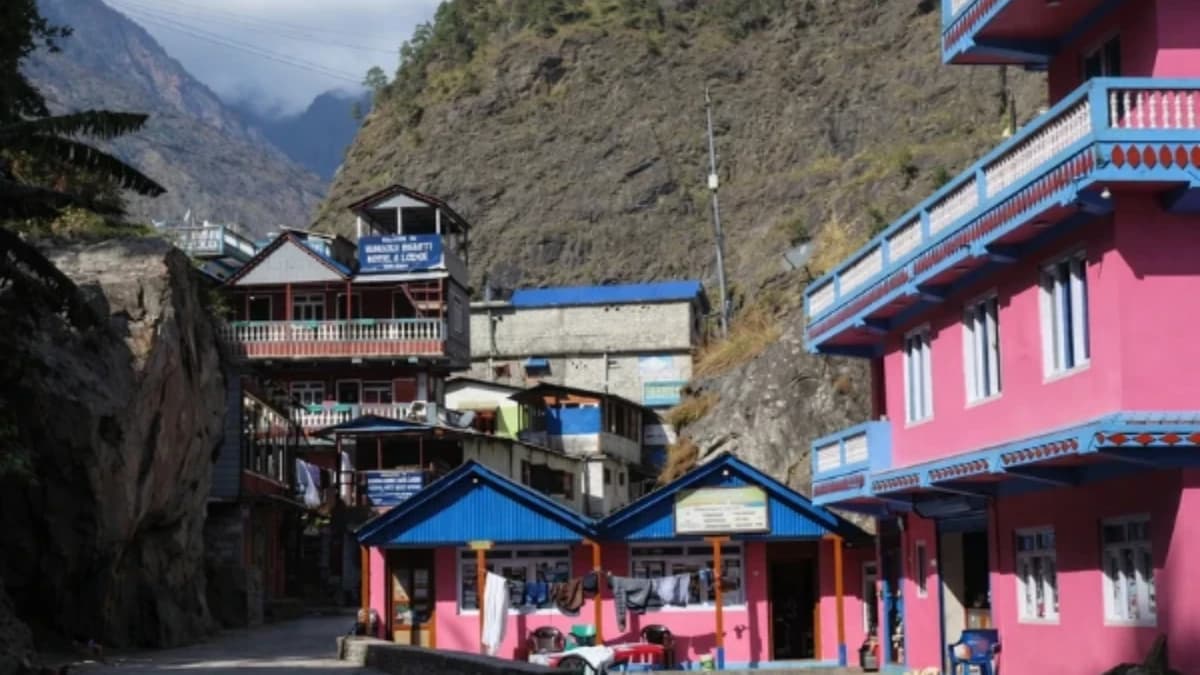
The Budhi Gandaki roars through a gorge below you, turquoise and violent, and the village of Machha Khola clings to the slope above it like it is trying not to get wet. Two days into the Manaslu Circuit, this is where most trekkers spend their second night, and where the river that originates from glaciers near the Tibetan border. This location in the Gorkha district places it not just on a map, but at a confluence of geography and human endeavour. The village sits at a precise and strategic elevation of about 930 metres (3,051 feet). This height is important because it represents the change from the humid, subtropical lowlands to the colder, rougher middle hills. It is also the first major acclimatisation stop for people on a lengthy journey up.
What Is the History of Machha Khola?
Identity and Etymology: The Deeper Meaning of "Fish River"
The direct translation from Nepali is "Fish River" (Machha means "fish" and Khola means "river"). This name is not just a casual description; it is a deep ecological and cultural record. A fish-rich river served as a lifeline in an area where food is scarce due to the rugged terrain. The term is older than tourism by hundreds of years, which suggests that the indigenous inhabitants, mainly the Gurung and later the Tibetan-descended population upriver, used to rely on the river's fish. Today, the glacier-fed torrent is so strong that there isn't much fish life in its higher reaches.
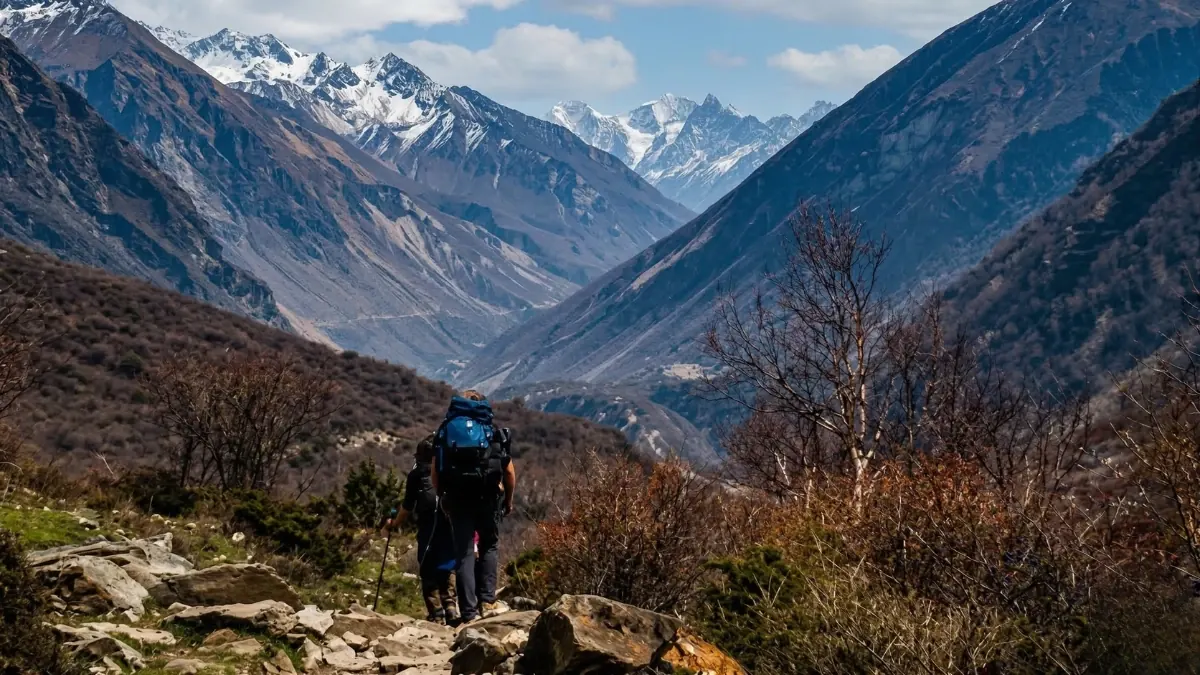
The name is a fossilised memory of a time when the environment was more diverse and possibly milder. It is the first hint that this environment has many layers, and that the words used to describe it are part of its past.
The village of Machha Khola is strategically located on the steep edge of a valley. It is not a traditional beautiful mountain village; instead, it is a working fortress of hospitality erected at the exact location where people need to rest after the long hike from Soti Khola. The river's presence defines its existence, which is a necessary symbiotic interaction.
Historical Importance: From Old Trade Routes to the Revolution in Trekking
The Machha Khola valley was an important trade route between the Himalayas even before the first European trekker came. It was part of a complicated system that connected the Tibetan plateau to the mid-hills and valleys of Nepal through the Larkya La pass near Manaslu. Caravans of salt, wool, and sheep from Tibet would cross this difficult land to trade for textiles, spices, and food from the south. The villages near Machha Khola, like Jagat and Deng, were not far-off outposts. They were vital places to rest and trade, and their cultures were a unique mix of Tibetan Buddhism and mid-hill Hinduism.
The opening of Nepal to tourism in the 1950s and the building of the Annapurna Circuit in the 1970s and 1980s are closely tied to Machha Khola's modern history. At first, the trail was a rough footpath that locals and their mule trains frequented. As the Circuit became known as the "world's greatest trek," Machha Khola became the most important part of the trekker's story. The building of the dirt road up the Budhi Gandaki valley to Machha Khola in the early 2000s was a big change that caused a lot of debate. Even though it changed the usual start of the walk, it made Machha Khola the new, non-negotiable entrance for anyone who want to explore the untouched environment of the upper Manaslu and Annapurna regions. So, its history is like a small version of Nepal's journey: from being a historic crossroads to becoming a centre for adventure tourism around the world.
The journey to Machha Khola
The journey to Machha Khola begins in Kathmandu, a lively city filled with activity. From there, you travel about 160 kilometres (99 miles) by road, a trip that usually takes seven to nine hours depending on road conditions and the weather.
Leaving Kathmandu, the road passes through busy valleys and terraced green hills scattered with small villages. Along the Trishuli River, a well-liked rafting location, the drive follows the Prithvi Highway. After turning toward Dhading Besi, the scenery becomes more remote and rugged.
he road grows narrower and more winding, offering beautiful views of the lower Himalayan landscape. Along the way, travellers often stop to enjoy local meals such as dal bhat (rice with lentils) or momo, Nepal’s traditional steamed dumplings.
Beyond Dhading Besi, the drive becomes more challenging. The route follows the Budhi Gandaki River, whose strong flow can be heard nearby. The final stretch includes crossing suspension bridges and travelling on narrow, rough roads, adding a sense of adventure to the trip. Although parts of the walk can be uncomfortable, the open mountain scenery makes it well worth the effort.
What Makes Machha Khola Worth Visiting?
The village of Machha Khola welcomes you with peace and kindness when you arrive. Its stone-built homes and simple lodges for walkers sit beside the calm Budhi Gandaki River, making for a very relaxing setting.
1. Local Life and Traditions:
People from Gurung and Magar communities live here, and their lively culture fills your visit. You can listen to music, dance, and eat enormous feasts with other people during holidays like Tihar and Dashain. Respect for nature and old-style farming are part of daily life. While Nepali and Gurung are the main languages, many people know some English from meeting walkers over the years.
2. The Scenery:
The land around the village is a dream for anyone who loves the outdoors. You’ll find rushing waterfalls and thick woods, perfect for walking and taking pictures. The area is rich with different plants and animals, making it a special place for nature.
3. What to Eat:
Meals here focus on classic Nepali food. Along with traditional dishes like momo dumplings and dhido, a porridge made from buckwheat or millet, you can anticipate dal bhat with vegetables and pickles. A cup of fresh tea is never far away. The village teahouses are famous for filling meals and a friendly feel, giving walkers the energy they need.
4. Starting Point for Exploration:
Machha Khola is where many walking routes begin, especially the famous path around Manaslu. It’s also a great place to stay while visiting nearby spots, like the Tatopani hot springs, a perfect place to rest tired muscles honestly.
5. Life in the Teahouses:
The teahouses give you a true taste of life in the mountains. They have a warm place to sleep and excellent, uncomplicated food. These little stops are the heart of the walking paths, where people from all over the world meet and share stories.
What Do You Need to Know About Machha Khola?
Visiting at the Right Time: The finest periods to go to Machha Khola are spring (March through May) and autumn (September into November). At these times, the climate is comfortable and the mountain scenery is at its very best.
Getting There: A private four-wheel drive vehicle is the most dependable way to reach the village. While you can take a local bus, the walk will be slower and much less comfortable.
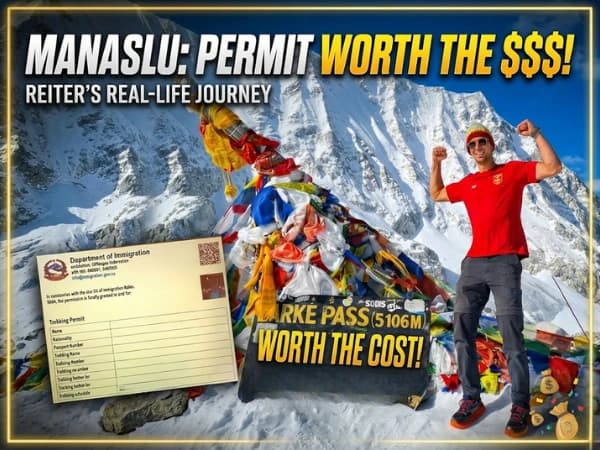
Required Documents: Should your journey extend into the nearby Manaslu region, you'll need to arrange the correct paperwork in advance. This includes a special permit for the Manaslu Restricted Area, as well as an entry permit for the Annapurna Conservation Area.
Where to Stay in Machha Khola
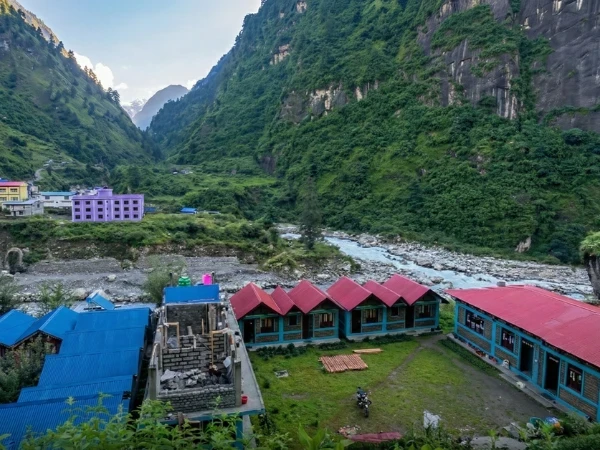
Teahouse accommodation is included in every Manaslu Circuit trek package we run. Your guide books your room on arrival, so you do not need to contact lodges directly. The teahouses in Machha Khola are basic but comfortable with twin rooms, hot meals, and a warm common room beside the Budhi Gandaki river.
Plan Your Manaslu Trek
Machha Khola is the first night on the Manaslu Circuit. If you are planning the walk, here are the treks that start from this village and the trail-stop guides that fill in the rest of the route.
- Manaslu Circuit Trek - 12 Days : the headline route over the Larkya La pass, starting from Machha Khola.
- Manaslu with Nar Phu Valley Trek - 21 Days : the longer combo route adding the restricted Nar Phu Valley.
- Tsum Valley Trek - 16 Days : the sacred Buddhist valley branching off the Manaslu trail.
- Soti Khola Guide : the road end where the Manaslu Circuit begins, one stage below Machha Khola.
- Jagat Village Guide : the historic stone gateway one stage above Machha Khola.
Machha Khola is an early stop on the Manaslu Circuit Trek, the second or third day of walking from the roadhead at Soti Khola.
Machha Khola (Fish River) is the name and the sound. The river is loud, the gorge is narrow, and the trail crosses suspension bridges that swing in the wind. It is the Manaslu Circuit's dramatic opening act, and it sets the tone for two weeks of walking through some of the wildest terrain in Nepal.
Machha Khola is on our Manaslu Circuit Trek.
WhatsApp:+977 9810351300
Email:[email protected]
Written by Shreejan Simkhada, CEO of The Everest Holiday and third-generation Himalayan guide. TAAN Member #1586.
Machha Khola is the start day on Manaslu. Our Manaslu Circuit Trek (12 Days) is private (your group only, no strangers), 2027 dates open, From USD $799. WhatsApp us for tailored 2027 dates and current departures.
 Chat with Shreejan