

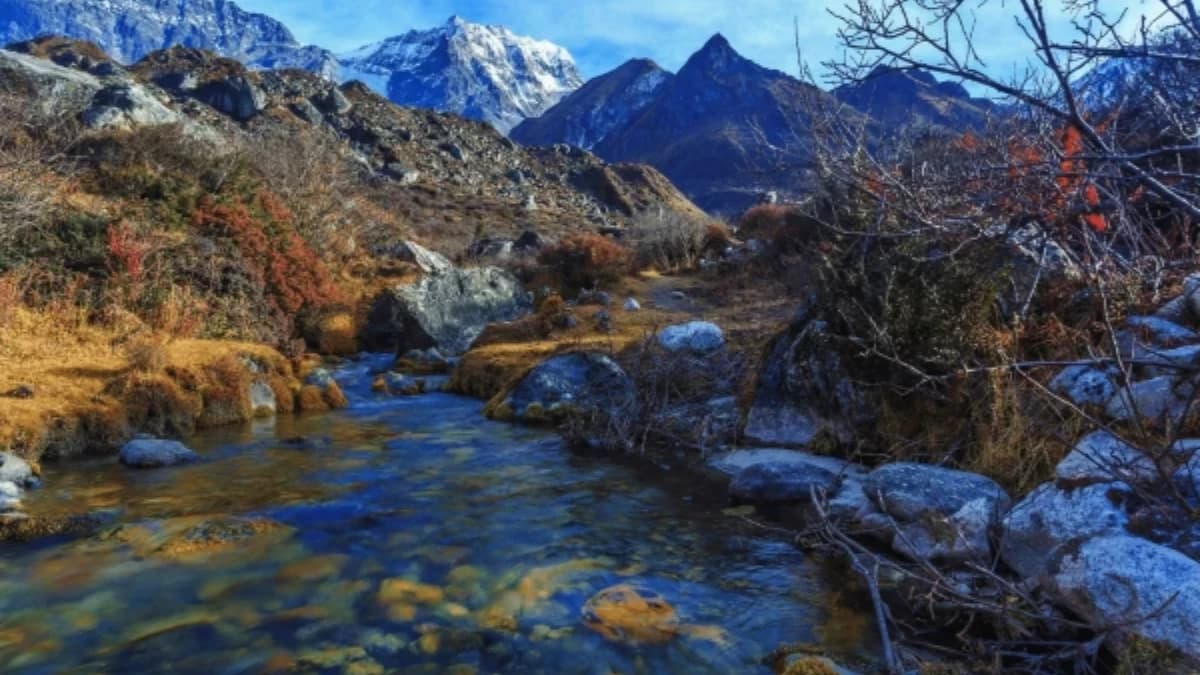
Short answer: Langtang National Park, established in 1976 as Nepal's first Himalayan national park, is the closest high-mountain wilderness to Kathmandu, about seven hours by road to the trailhead at Syabrubesi. It holds the Langtang Valley, Gosaikunda and Helambu treks. Walk it on our Langtang Valley trek.
Written by Shreejan Simkhada, CEO of The Everest Holiday and third-generation Himalayan guide. TAAN Member #1586.
Seven hours north of Kathmandu, the road ends. Not gradually, not with a thinning of pavement into gravel into dirt. It ends at Syabrubesi, a small town wedged into the bottom of a gorge where the Langtang Khola and the Bhote Koshi rivers meet, and from Syabrubesi the only way forward is on foot. Seven hours of driving through Nepal's middle hills, past terraced farmland, through Tamang villages, along roads that cling to hillsides with an optimism that defies engineering, and then walking. Into a valley that holds one of Nepal's finest national parks, one of its most devastating earthquake stories, and some of the most accessible high-altitude trekking in the Himalaya.
Langtang National Park at a glance
| Established | 1976, Nepal's first Himalayan national park |
| Getting there | About 6 to 7 hours by road north of Kathmandu to Syabrubesi, then on foot |
| Highest peak | Langtang Lirung, 7,234 m |
| Wildlife | Red panda, Himalayan tahr, langur and over 250 bird species |
| People | Tamang and Sherpa villages with a living Buddhist culture |
| Trek it on | Langtang Valley Trek, Langtang Gosainkunda Trek, Tamang Heritage Trail |
Langtang National Park is managed by Nepal’s Department of National Parks and Wildlife Conservation.
Langtang National Park was established in 1976, the same year as Sagarmatha National Park in the Everest region, and protects 1,710 square kilometres of the Langtang Himal, the Gosaikunda lakes, and the Helambu region north and northeast of Kathmandu. It is the closest national park to the capital with genuine Himalayan landscape, high peaks, glaciers, alpine meadows, and the full ecological transition from subtropical forest to permanent ice. And it is the most affordable major Himalayan trekking destination in Nepal: no domestic flights, no restricted area permits, and a trek duration (seven to eleven days) that fits schedules and budgets that the longer Everest and Annapurna routes do not. Related: Annapurna Conservation Area, Nepal: The Complete Guide to Trekking, Culture and Himalayan Adventure.
What Wildlife and Landscapes Does Langtang National Park Contain?
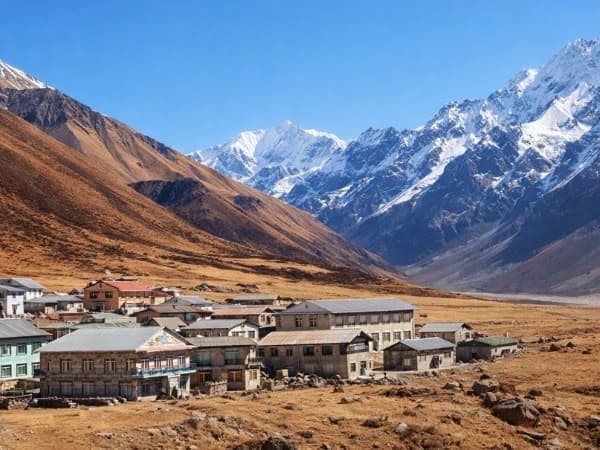
Mountains. Langtang Lirung (7,227 metres) is the highest peak in the park and the dominant visual presence in the Langtang Valley. Gangchempo (6,387 metres), Naya Kangri (5,846 metres), Dorje Lakpa (6,966 metres), and dozens of unnamed peaks above 5,000 metres complete the range. The mountains are not eight-thousanders, the park contains none of the fourteen highest peaks, but their proximity to the valley floor creates a sense of mountain immersion that the more distant views of the Khumbu cannot match. From Kyanjin Gompa, Langtang Lirung is less than five kilometres away. You can hear its ice calving.
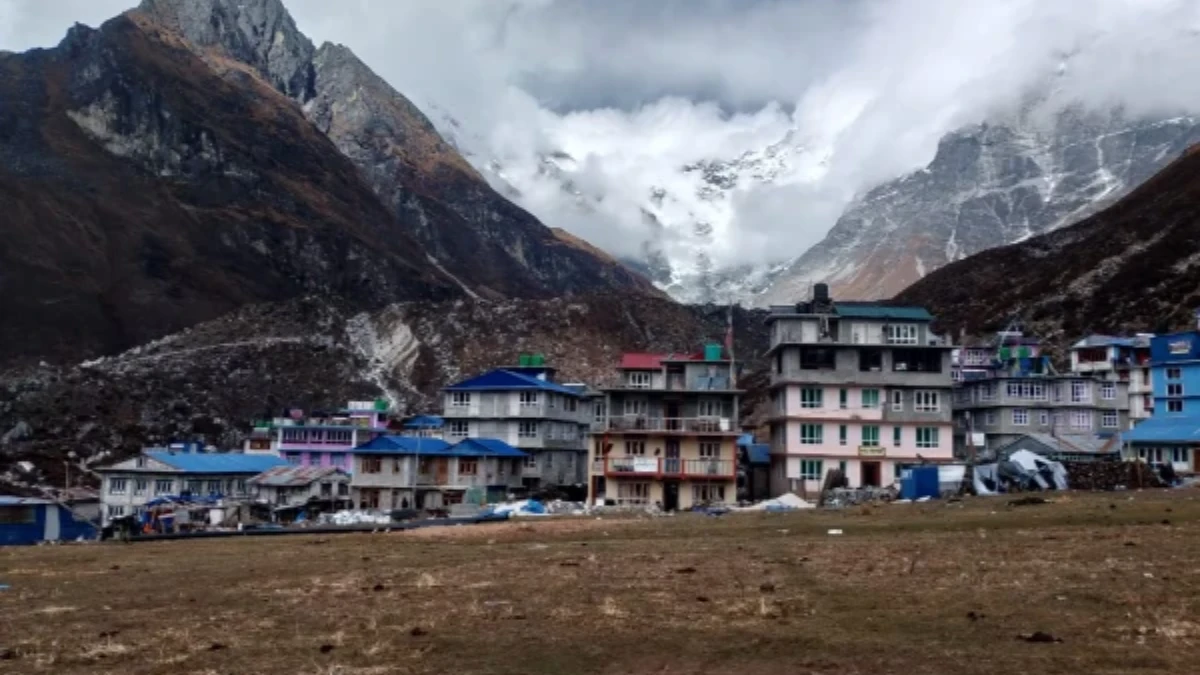
Forests. The park's forest cover is one of the most intact in Nepal's accessible trekking regions. The lower sections (1,500-2,500 metres) are subtropical, sal, bamboo, and broadleaf species. The middle sections (2,500-3,500 metres) are temperate, oak, rhododendron, maple, and birch. The upper sections (3,500-4,000 metres) are subalpine, juniper, dwarf rhododendron, and scrub. The rhododendron bloom in spring (March-April) transforms the trail between Lama Hotel and Langtang Village into a tunnel of crimson, pink, and white.
Wildlife. The park is home to some of Nepal's most iconic and most elusive species. The red panda, Nepal's most celebrated conservation success, inhabits the bamboo forests between 2,200 and 4,800 metres. Sightings are rare (the animals are nocturnal and solitary) but the bamboo habitat along the Langtang trail is confirmed red panda territory, and camera traps have documented individuals within walking distance of the trail.
Himalayan tahr, wild mountain goats with shaggy coats, are commonly seen on the cliff faces above the trail between Lama Hotel and Langtang Village. Langur monkeys crash through the forest canopy at lower altitudes. Musk deer, Himalayan black bear, and wild boar inhabit the forest sections. And the snow leopard, confirmed present in the park through camera trap surveys, inhabits the high ridges above the valley, invisible to trekkers but as real as the mountains it hunts across.
The bird life is exceptional: over 250 species recorded, including the Himalayan monal (danphe), blood pheasant, Tibetan snowcock, golden eagle, and lammergeier. The forest sections between Syabrubesi and Lama Hotel are particularly productive for birding, the mixed forest at 2,000-3,000 metres supports the highest diversity.
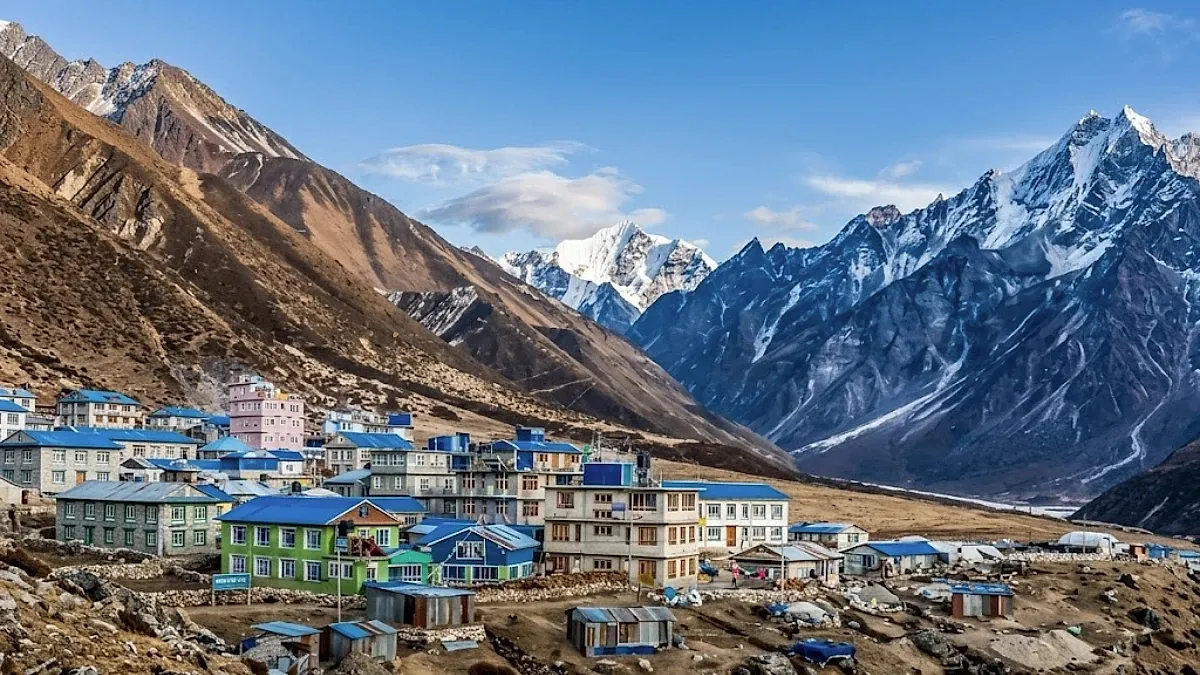
Glaciers. The Langtang Glacier and its tributaries fill the upper valley above Kyanjin Gompa. The glaciers are retreating, like all Himalayan glaciers, but they remain substantial, feeding the Langtang Khola and providing the water that sustains the valley's agriculture and the settlements downstream. The glacier surface is accessible on foot from Kyanjin Gompa, a day walk across moraine to the ice edge. Related: Kanchenjunga Conservation Area: Nepal's Wildest Protected Wilderness.
How did the 2015 earthquake affect Langtang National Park?
On April 25, 2015, a magnitude 7.8 earthquake struck Nepal with its epicentre in the Gorkha district, northwest of Kathmandu. The earthquake triggered a massive avalanche in the Langtang Valley that buried the village of Langtang, a settlement of approximately sixty houses, under millions of tonnes of rock, ice, and snow. Over three hundred people died, including foreign trekkers, local residents, and lodge staff. It was the single deadliest event of the earthquake, and the devastation was absolute, the village, which had stood on a broad valley floor between the river and the mountain, simply ceased to exist.
The memorial at the Langtang avalanche site is visible from the trail, a collection of stone cairns, prayer flags, and photographs marking the location where the village once stood. Walking past the memorial is a sobering experience. The scale of the debris field, rocks the size of houses, scattered across a valley floor that was, hours before the earthquake, a community with families, teahouses, and the daily routines of mountain life, makes the destructive power of the Himalaya viscerally real.
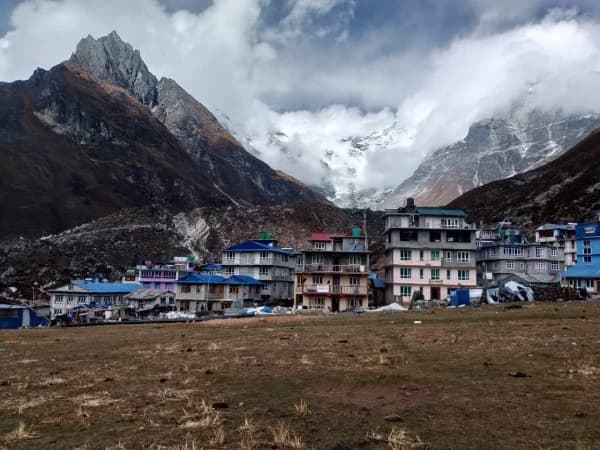
The Langtang community has rebuilt. A new settlement, Langtang Village, has been established nearby, on ground assessed as safer from future avalanche risk. Teahouses have reopened. The trail is fully functional. And the valley, which lost hundreds of its people and most of its buildings, has recovered with a resilience that reflects both the Tamang community's strength and the trekking economy's importance to their survival.
Trekking in the Langtang Valley after 2015 is not just a recreational choice. It is an economic contribution to communities that lost everything and rebuilt from nothing. Every dal bhat purchased, every room occupied, every tip given at a Langtang teahouse directly supports families who experienced one of the worst natural disasters in Nepal's history and who chose to stay, rebuild, and welcome trekkers back.
Who are the Tamang people of Langtang Valley?
The Langtang Valley is Tamang homeland. The Tamang, one of Nepal's largest ethnic groups, are Tibeto-Burman people whose culture, language, and religious practices reflect their Tibetan heritage. The Tamang of the Langtang Valley practise Tibetan Buddhism (primarily the Nyingma tradition), and their monasteries, prayer flags, and mani walls give the valley its distinctive cultural character.
The Tamang Heritage Trail, a trekking route through Tamang villages in the hills south of the Langtang Valley, was developed specifically to showcase Tamang culture and to distribute trekking income across a wider area. The trail passes through villages where traditional Tamang life continues: stone houses, terraced fields, weaving, and the daily rituals of Buddhist practice. For trekkers interested in culture as well as mountains, combining the Tamang Heritage Trail with the Langtang Valley trek provides both.
What Treks Can You Do in Langtang National Park?
Langtang Valley Trek (7-11 days): The park's signature trek. Syabrubesi to Kyanjin Gompa and return, with optional side trips to Kyanjin Ri (4,773 metres) and Tserko Ri (4,984 metres). Maximum altitude: 4,984 metres. Difficulty: moderate.
Gosaikunda Trek (3-5 days): Dhunche to the sacred Gosaikunda lakes at 4,380 metres and return. Can be combined with Langtang Valley via Laurebina La pass. Maximum altitude: 4,610 metres. Difficulty: moderate to challenging.
Helambu Trek (5-7 days): A circuit through the Helambu region south of Gosaikunda, starting from Sundarijal on the Kathmandu Valley rim. Lower altitude (maximum 3,600 metres), strong cultural component (Tamang and Hyolmo villages). Difficulty: easy to moderate.
Langtang-Gosaikunda-Helambu Circuit (12-16 days): The complete route that combines all three areas. Starts with the Langtang Valley, crosses Laurebina La to Gosaikunda, and descends through Helambu to Kathmandu. Maximum altitude: 4,610 metres. The most complete trip of the Langtang region.
What permits do you need to trek in Langtang National Park?
Permits: Langtang National Park entry permit, NPR 3,000 for foreign nationals and NPR 1,500 for SAARC nationals, roughly twenty and ten US dollars, plus a TIMS card, which is genuinely required in Langtang. No restricted area permit needed for any route within the park.
Access: Bus from Kathmandu to Syabrubesi (seven to eight hours, departing from Machhapokhari bus park). Private vehicle also available (approximately one hundred dollars). No domestic flights required, this is the only major Himalayan national park accessible entirely by road from Kathmandu.
Season: October-November (best, clear, cold, dry). March-May (good, warmer, rhododendron bloom, hazier). December-February (possible for experienced trekkers, very cold but clear and empty). June-September (monsoon, not recommended except for Gosaikunda during Janai Purnima festival in August).
Is Langtang National Park worth visiting?
Langtang National Park does not have Everest. It does not have the Annapurna Circuit's variety. It does not have the Manaslu Circuit's remoteness or Upper Mustang's cultural exoticism. What it has is proximity, accessibility, intimacy, and the specific beauty of a valley that is narrow enough, close enough, and deep enough to make you feel not that you are looking at the Himalaya but that you are inside it.
Seven hours from Kathmandu. No flights. No restricted permits. Seven to eleven days. And at the end of those days, at Kyanjin Gompa, eating yak cheese on a terrace with Langtang Lirung filling the sky, the understanding that the closest Himalayan wilderness to Nepal's capital is also one of the finest. Not in spite of its proximity but because of it. Because the mountains do not care how far you travelled to reach them. They care only that you came. And Langtang, close, accessible, intimate, and scarred by earthquake but unbroken by it, is the mountain that says: you do not have to go far to go deep.
Langtang National Park is home to the Langtang Trek (8 days), the Langtang Gosaikunda Trek (13 days), and the Langtang Ganja La Pass Trek (12 days). It is the closest national park to Kathmandu with high-altitude trekking.
Langtang National Park is the closest national park to Kathmandu and the one that the 2015 earthquake hit the hardest. The village of Langtang was buried entirely. It has been rebuilt, the trail is open, and trekking here now is an act of solidarity as much as adventure. The valley is beautiful, the people are resilient, and the cheese factory at Kyanjin Gompa still makes the best yak cheese in Nepal.
Our Langtang Valley Trek passes through the heart of the national park.
WhatsApp:+977 9810351300
Email:[email protected]
Langtang National Park is our 8-day Valley trek home. Our Langtang Trek (8 Days) is private (your group only, no strangers), 2027 dates open, From USD $490. WhatsApp us for tailored 2027 dates and current departures.
 Chat with Shreejan