

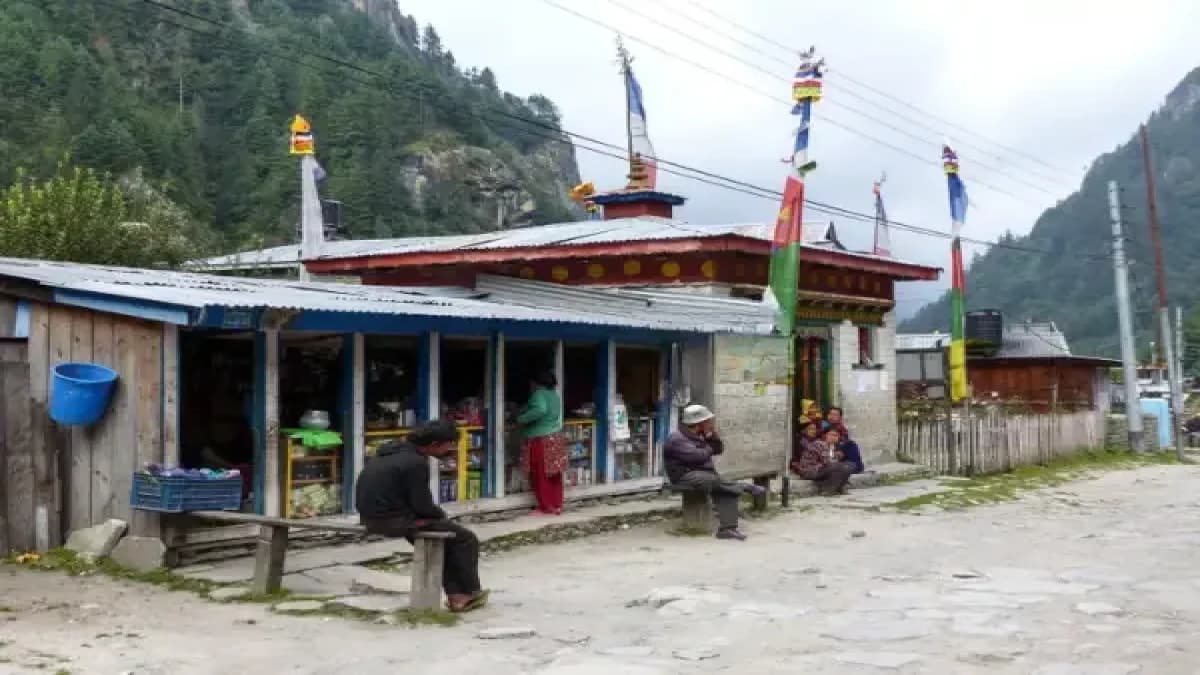
Koto is a small village on the Annapurna Circuit, in the Manang district, and a vital, historic gateway to the hidden Nar Phu valley. This small, often-missed settlement marks a crucial turning point in the Himalayan landscape. Located at just 2,640 metres (8,661 feet), Koto sits at the powerful meeting place of two rivers and two legendary trails. It is where the wider, busier Marshyangdi Valley narrows into the steep, secretive entrance of the Nar Phu Valley. For trekkers, passing through Koto feels like finding a hidden door in a mountain wall a door that leads to some of Nepal’s most remote and ancient cultures.
| Detail | Fact |
|---|---|
| Altitude | 2,640 m |
| Region | Annapurna Circuit, Manang district |
| Role | Gateway village to the hidden Nar Phu valley |
| How you reach it | Up the Marsyangdi valley from Dharapani, just below Chame |
| Permit to go north | Nar Phu Restricted Area Permit ($100/week Sep–Nov, $75/week Dec–Aug) plus ACAP |
| Trek | Nar Phu Valley Trek |
What Is the History of Koto Village?
Koto’s history is deeply tied to its location as a gateway.
A History of Salt and Wool: For centuries, Koto was not a destination but a vital stop. It was a trading post on the ancient salt caravan route between Tibet and the lower hills of Nepal. Traders from the hidden Phu Valley would bring down salt, wool, and herbs to exchange for grain, cloth, and tools from the south. Koto was their first point of contact and trade.
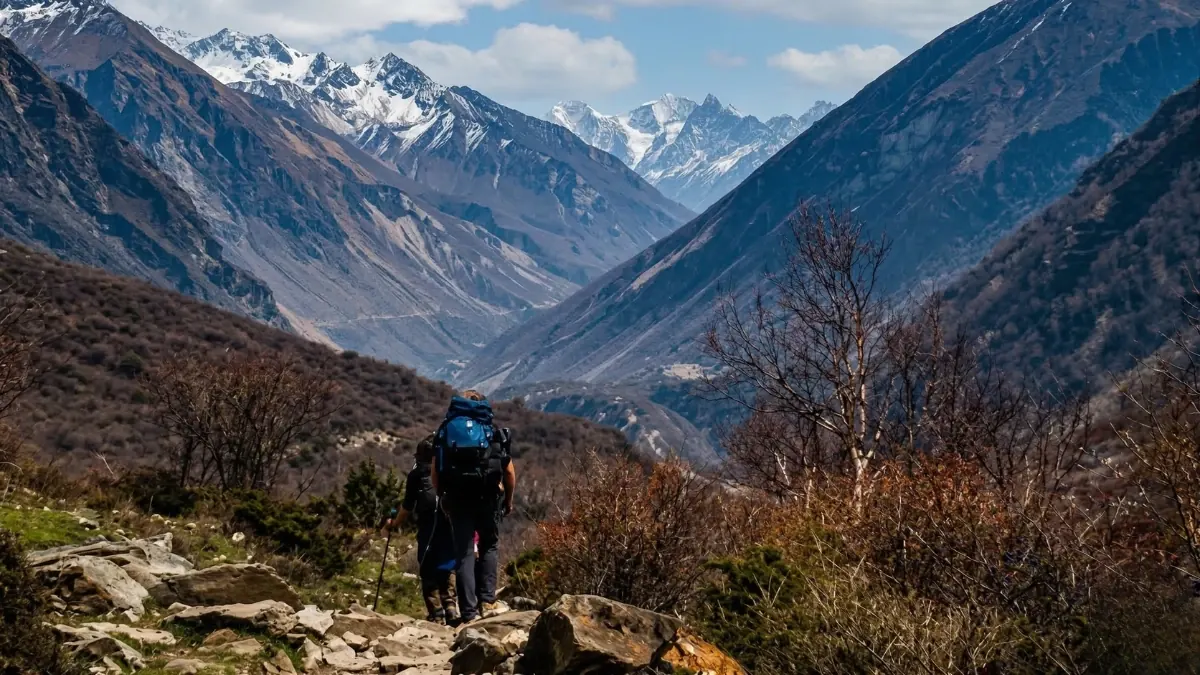
Guardian of the Gateway: This history gives Koto a guardian-like significance. It controlled access to the remote valleys. This legacy continues today with the modern checkpoint. Culturally, Koto is a mix. The lower Marshyangdi Valley has more Hindu and Gurung influence. But the trail leading north immediately enters a zone of pure Tibetan Buddhism, preserved in isolation. Koto is the threshold between these two worlds.
Local Life (A Village of Provision): Life in Koto revolves around the trail and the road. Locals run simple lodges and shops that cater to trekkers about to enter or just exiting the Nar Phu Valley. There are also apple orchards and small farms on the terraced hills above the village. People here are practical, friendly, and used to helping trekkers with final preparations. Related: Jagat, Nepal: The Historic Stone Gateway to the Manaslu Conservation Area (1,410m).
What Can You See from Koto?
Koto’s geography is all about powerful junctions. The scenery here is dramatic, defined by water, rock, and deep gorges.
The Confluence of Valleys: Koto sits at a spectacular and noisy meeting point. It is here that the Phu Khola river, rushing down from the hidden Nar and Phu Valleys, crashes into the larger, faster Marshyangdi River. The Marshyangdi, its name meaning “rage” in Nepali, lives up to its name with roaring blue-white waters. The village is built on a steep slope above this powerful junction.
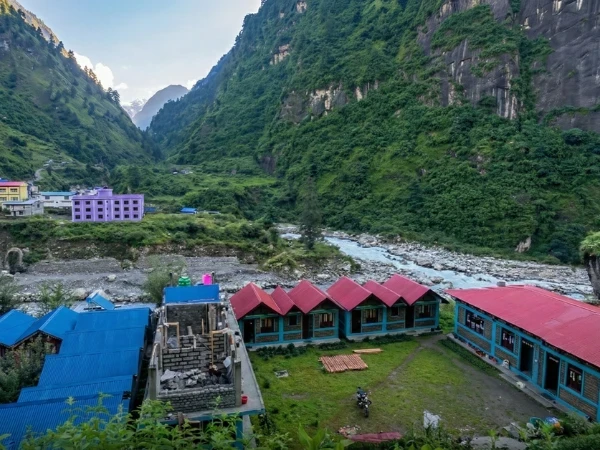
A Landscape of Entry: The view in Koto is dominated by the dramatic entrance to the Nar Phu Valley. To the north, the wide Marshyangdi Valley you have been travelling through suddenly closes into a tight, V-shaped gorge. This dark, narrow canyon, carved by the Phu Khola, looks like a secret passage. High, forested cliffs rise straight up on both sides. It is an exciting and slightly intimidating sight, promising adventure ahead.
From Busy Road to Quiet Trail: Koto also marks a clear sensory shift. Below the village runs the rough dirt road that services the Annapurna Circuit. You will see and hear occasional jeeps. But the trail into Nar Phu leaves this road behind entirely. Within minutes of crossing the bridge out of Koto, the engine sounds fade, replaced by the roar of the river and the wind in the pines. You transition from a road village to a true trailhead.
What Is Life Like in Koto?
Koto is home to ethnic communities influenced by Tibetan and Himalayan culture. Most residents follow Buddhist traditions, though some Hindu customs are also practised. Cultural elements such as prayer flags, mani stones, and small chortens can be seen around the village.
Daily life in Koto is simple and closely connected to nature and agriculture. Locals grow crops such as barley, maize, potatoes, and buckwheat. Livestock like goats, cows, and yaks play an important role in daily life, providing milk, meat, and income.
Traditional stone houses with wooden roofs reflect mountain architecture, designed to protect against cold weather and heavy rain. Family life is strong, and villagers work together during farming seasons and festivals.
Hospitality is an important part of local culture. Trekkers are welcomed warmly into teahouses and homes, often offered tea and local food. Conversations with villagers give insight into mountain life, seasonal challenges, and cultural traditions that have been preserved for generations.
Festivals such as Losar (Tibetan New Year) and local religious ceremonies are celebrated with prayers, gatherings, and community meals, strengthening social bonds. Related: Arughat Nepal: Historic Gateway to the Manaslu Circuit Trek.
Where Can You Stay in Koto?
Koto provides simple yet comfortable teahouse lodging for trekkers passing through the village. Most rooms are basic, with beds and blankets, while meals are enjoyed in shared dining areas. The food menu commonly includes dal bhat, noodles, soups, Tibetan bread, tea, and a few basic Western items. Services such as electricity and hot showers are limited and are usually powered by solar energy. Although the facilities are not luxurious, they offer enough comfort for rest and recovery before continuing to higher elevations. Trekkers are encouraged to bring necessary personal items and supplies, especially when planning to travel onward to the remote Nar Phu Valley.
Trekking Routes from Koto
Koto is a key junction for two major trekking routes in Nepal:
Annapurna Circuit Trek Route
Trekkers reach Koto along the Annapurna Circuit, coming up the Marsyangdi valley from Dharapani; Chame, the district headquarters, is the next village up the trail. Koto is not on the Manaslu Circuit itself; that trail runs up the Budhi Gandaki on the far side of the range. Trekkers who combine the two cross the Larke La at the end of the Manaslu Circuit, drop to Dharapani, join the Annapurna Circuit and walk up to Koto to enter Nar Phu.
This section of the trail becomes steeper and more alpine, offering changing landscapes and cooler temperatures.
Nar Phu Valley Trek Route
Koto is the official entry point to the Nar Phu Valley Trek, a restricted and remote area. From Koto, the trail heads northeast toward Meta, Phu Village, and Nar Village, crossing high passes such as Kang La Pass.
Trekkers must obtain a Nar Phu Restricted Area Permit (US$100 per week in September to November, US$75 per week December to August) plus the Annapurna Conservation Area permit to head north from Koto, and both are checked at the Koto checkpoint. The current restricted-area fees are published by Nepal's Department of Immigration. This route is known for its isolated villages, ancient monasteries, and untouched landscapes.
Because of its importance, many trekkers spend a night in Koto to rest, organise permits, and prepare for the next stage of their journey.
Why Koto Matters on the Nar Phu Valley Trek
Koto may be small, but it is one of the most important junction villages in the Annapurna region. It connects major trekking routes, preserves local culture, and offers a peaceful environment surrounded by nature.
Its role as a gateway to Nar Phu Valley, combined with its scenic beauty and cultural richness, makes Koto a meaningful stop for trekkers seeking both adventure and authentic Himalayan life.
Related Treks & Guides
- Manaslu Circuit Trek
- Tsum Valley and Manaslu Circuit Trek
- Tsum Valley Trek
- Dharmashala and Jagat
- Bhimtang
Koto is the gateway to the Nar Phu Valley Trek and also a stop on the Annapurna Circuit. The trail splits here: east to Nar Phu, north to Manang.
Koto is where the Annapurna Circuit and the Nar Phu Valley part ways. Go straight and you continue the circuit. Turn right and you enter one of Nepal's most restricted and rewarding side valleys. The choice is yours. If you have the time and the permit, turn right. Nar Phu is extraordinary.
Koto is the junction on our Annapurna Circuit Trek and the entry point for our Nar Phu Valley Trek.
WhatsApp:+977 9810351300
Email:[email protected]
Written by Shreejan Simkhada, CEO of The Everest Holiday and third-generation Himalayan guide. TAAN Member #1586.
Koto is the Nar Phu trail head from Manaslu. Our Manaslu with Nar Phu Valley Trek (21 Days) is private (your group only, no strangers), 2027 dates open, From USD $1438. WhatsApp us for tailored 2027 dates and current departures.
Continue planning your trek
This is one stop on the Nar Phu Valley trail. For the full route, read our restricted-area permits guide. When you are ready for dates and prices, see the Nar Phu Valley Trek (9 days) or WhatsApp us directly. We reply personally.


 Chat with Shreejan