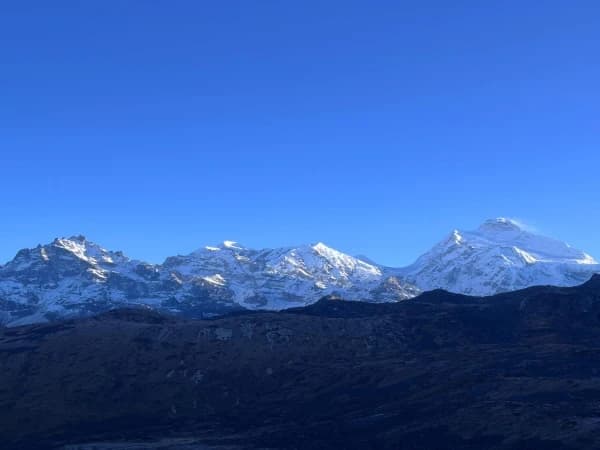
Kambachen is one of the most dramatic high-altitude settlements on the Kanchenjunga North Base Camp trek. Located at 4,050 meters (13,287 feet), Kambachen marks the transition from green alpine valleys to the harsh and powerful glacier landscape of the high Himalayas.
After leaving Ghunsa, trekkers gradually climb into a quieter and more rugged world. The trail follows the Ghunsa Khola river through landslide areas, rocky paths, and open yak pastures. When Kambachen finally appears beneath massive snow-covered peaks, it feels like entering a true Himalayan wilderness.
For many trekkers, Kambachen is not only a destination but an important acclimatization stop before moving toward higher camps such as Lhonak and Kanchenjunga North Base Camp.
Location and Trekking Importance
Kambachen is in the middle of the Kanchenjunga Conservation Area in eastern Nepal. The village sits in a wide glacial valley surrounded by towering mountains and ice-covered ridges.
Typical trekking route:
Taplejung → Sekathum → Amjilosa → Gyabla → Ghunsa → Kambachen → Lhonak → Kanchenjunga North Base Camp
Because the elevation rises above 4,000 meters here, most itineraries include an acclimatization day in Kambachen. Trekkers often take short hikes to nearby viewpoints or glacier areas to help the body adjust safely to altitude.
The settlement itself is small, seasonal, and built mainly to support trekkers, yak herders, and expedition teams.
Landscape and Mountain Scenery
The scenery around Kambachen is breathtaking and raw. Forests disappear, replaced by rocky terrain, moraines, and glacial landscapes. Huge Himalayan giants dominate the skyline.
Nearby peaks include:
-
Jannu Himal (Kumbhakarna)
-
Wedge Peak
-
Sobithongie Peak
- Kanchenjunga massif viewpoints
The dramatic presence of Jannu Himal is especially striking. Its steep vertical faces rise sharply above the valley, creating one of the most impressive mountain views in Nepal.
The environment here feels remote and untouched. Strong winds, thin air, and vast open spaces remind trekkers they are now deep in the high Himalayas.
Culture and Local Life
Unlike lower villages, Kambachen does not have a permanent large population. It functions mainly as a seasonal settlement used by yak herders and trekking lodges during the trekking seasons.
Local people from Ghunsa manage most teahouses. Tibetan Buddhist culture remains strong throughout the region, reflected in prayer flags, mani stones, and small shrines placed along the trail.
Life here is simple and focused on survival in a harsh environment. Yaks play an essential role, carrying supplies and supporting local livelihoods. Trekkers often see yak caravans moving slowly across the valley, adding to the authentic Himalayan experience.
Accommodation and Facilities
Accommodation in Kambachen is basic but sufficient for trekkers.A few stone teahouses have basic twin rooms with mattresses and warm blankets. Because of the altitude and remoteness, comfort is limited, but the warm hospitality makes the stay memorable.
Dining rooms are heated by yak-dung or wood stoves, creating a cozy gathering place during cold evenings. Meals are simple yet nourishing, typically including dal bhat, noodle soup, fried rice, potatoes, pancakes, and hot drinks such as tea or ginger lemon honey.
Electricity availability is limited and usually solar-powered. Charging devices may be possible for an extra cost. Internet access is extremely limited or unavailable, allowing trekkers to disconnect and fully experience the mountains.
Acclimatization and Side Hikes
Kambachen is one of the most important acclimatization points on the Kanchenjunga trek. Spending an extra day here significantly improves safety before ascending higher.
Popular acclimatization walks include:
-
Glacier viewpoints above the village
-
Short hikes toward Jannu base area
-
Exploration of surrounding moraines and alpine ridges
These hikes offer spectacular panoramic views while helping the body adapt gradually to altitude.
Best Time to Visit Kambachen
Spring (March to May) and autumn (September to November) are the best seasons to reach Kambachen.
Spring offers stable weather with clearer mornings and moderate temperatures, while autumn provides excellent visibility and crisp mountain views. Winter temperatures drop extremely low, and heavy snowfall can block trails beyond Ghunsa. Monsoon season brings unstable trail conditions in lower sections of the trek.
Typical temperatures:
-
Spring/Autumn Daytime: 5°C to 12°C
-
Spring/Autumn Night: -8°C to -12°C
-
Winter Nights: below -20°C
Why Kambachen Is a Special Stop
Kambachen represents the true beginning of the high Himalayan expedition phase of the Kanchenjunga trek. The comfort of villages fades, replaced by vast glaciers, silence, and immense mountain scenery.
Many trekkers describe Kambachen as one of the most powerful places on the journey. The scale of the mountains, the isolation, and the raw beauty create a deep sense of adventure rarely found on busier trekking routes.
It is here that trekkers mentally prepare for the final approach toward Kanchenjunga North Base Camp, one of Nepal’s most remote and rewarding destinations.