
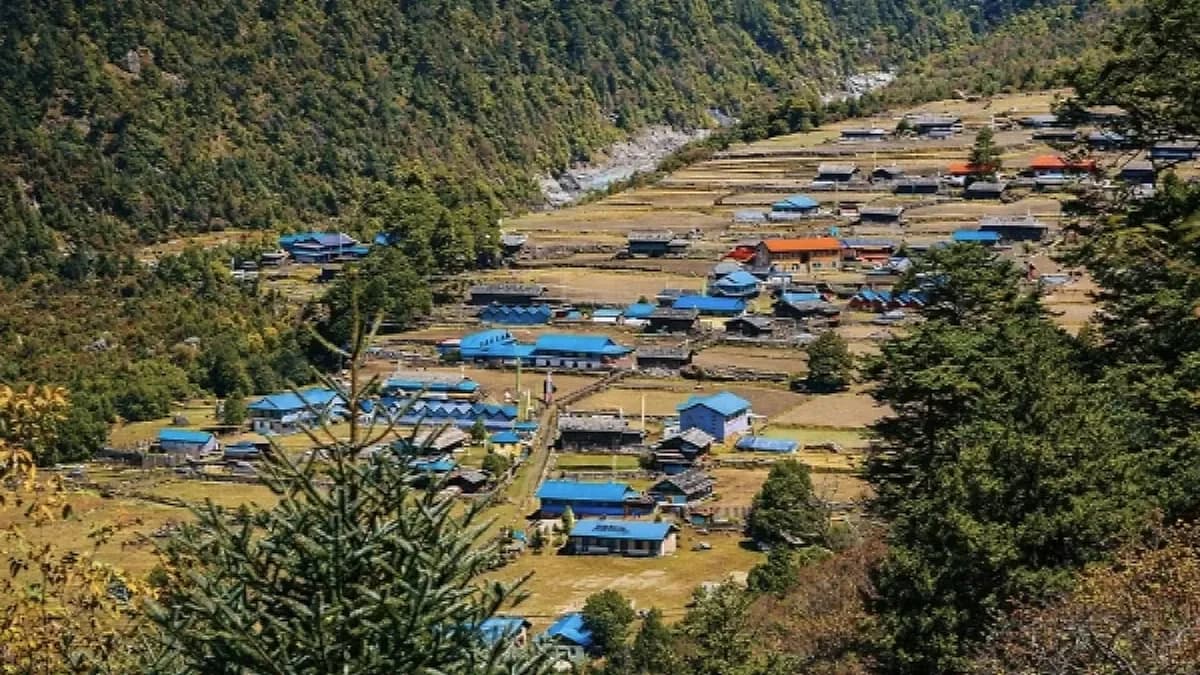
Short answer: Ghunsa (3,595 m) is a Sherpa village of flat-roofed houses, prayer flags and mani walls in the Ghunsa Khola valley, reached about five days into the Kanchenjunga trek, with views of Jannu (7,711 m). It is the main village of the north side and a rest stop before the higher valleys. It is on our 19-day Kanchenjunga Base Camp trek.
Five days into the Kanchenjunga trek, after climbing through subtropical forest, crossing suspension bridges over rivers that roar with glacial fury, and passing through Limbu and Rai villages where the faces and the food change with each day's altitude gain, the trail enters a valley that feels like arriving in Tibet. The houses have flat roofs. Prayer flags cross every gap between buildings. Mani walls line the trail in unbroken rows of carved stone. And the people, who have been Limbu and Rai for four days, are suddenly Sherpa, speaking a Tibetan-derived language, practising Buddhism, and living in a village that is culturally and architecturally closer to Lhasa than to Kathmandu.
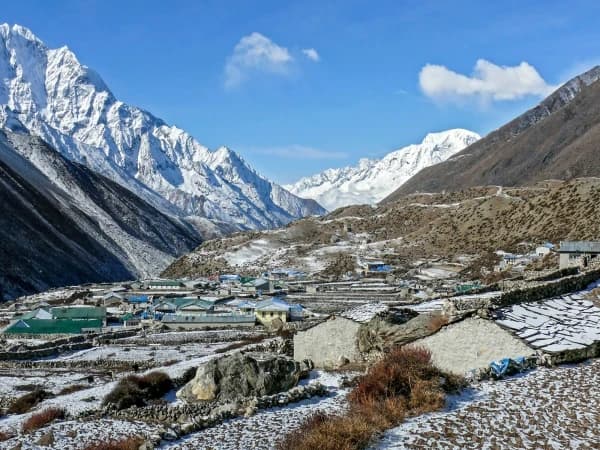
Ghunsa sits at 3,595 metres in the Ghunsa Khola valley, a broad, flat-bottomed valley surrounded by peaks above six and seven thousand metres, with the massive bulk of Jannu (Kumbhakarna, 7,711 metres) visible to the north. The village is the largest settlement on the Kanchenjunga trek, the main acclimatisation stop before the push to the north and south base camps, and the cultural centre of the upper valley's Sherpa community. It has a monastery, a school, a health post, and approximately forty houses, which makes it, by Kanchenjunga standards, a metropolis.
Fewer than two thousand trekkers per year reach Ghunsa. Compare this to the fifty thousand who reach Namche Bazaar on the EBC trail, and the difference in atmosphere is absolute. At Namche, you share the trail with hundreds. At Ghunsa, you share it with the handful of trekkers who were willing to fly to Taplejung, walk for five days through some of the most remote terrain in Nepal, and commit to a three-week trek that the popular routes' convenience has made unnecessary for most visitors.
How Do You Get to Ghunsa?
The trail from Taplejung (or more precisely from the trailhead at Chirwa or Mitlung) to Ghunsa takes five to six days. The route follows the Tamor River north through increasingly remote terrain, from the agricultural lowlands at 1,200 metres through dense forest, past waterfalls and gorges, and up into the high valley where Ghunsa sits.
The walking is demanding. Not because of altitude, the daily gains are moderate, but because of the terrain. The trail is less maintained than the Everest or Annapurna routes. River crossings are more frequent and more challenging. The forest sections are denser and, in monsoon season, leech-infested. And the remoteness means that if something goes wrong, an injury, a weather event, a medical emergency, help is further away than on the popular routes. A good guide and a well-equipped team are not luxuries on the Kanchenjunga trek. They are necessities.
The cultural transition along the trail is one of its great pleasures. The lower villages are Limbu, an indigenous ethnic group with their own language, religion (Kirat), and traditions. The middle villages are mixed, Limbu, Rai, Sherpa, and Tibetan influences blending. And Ghunsa is Sherpa, fully, distinctly, unmistakably Sherpa in the way that Namche and Tengboche are Sherpa in the Khumbu. Walking from Taplejung to Ghunsa is walking through three cultures in five days.
What Is Ghunsa Village Like?
Ghunsa is built on a south-facing terrace above the Ghunsa Khola, in a position that maximises winter sunlight and provides natural drainage. The houses are stone-walled with flat roofs, the same Tibetan architectural style found in Samagaon on the Manaslu Circuit and in the upper Khumbu villages. Firewood is stacked against every wall, the winters at 3,595 metres are long and cold, and the woodpiles represent months of labour and months of warmth.
The monastery, Ghunsa Gompa, sits on a rise above the village. It is active, served by a small number of monks, and follows the Nyingma tradition. The prayer hall contains wall paintings, statues, and the specific collection of sacred objects that a Himalayan monastery accumulates over centuries. Visitors are welcome. The monastery is not a museum, it is a working religious institution, and the monks' chanting, the butter lamp light, and the incense that fills the prayer hall create an atmosphere of lived devotion that tourist-oriented monasteries sometimes lack.
The school serves the children of Ghunsa and the surrounding settlements. The health post, staffed seasonally, provides basic medical care. A small shop sells biscuits, noodles, and batteries at prices that reflect the five-day porter carry from the roadhead. And the teahouses, four or five of them, basic but welcoming, provide the accommodation that trekkers need for the acclimatisation day that the altitude demands.
Why Is the Acclimatisation Day in Ghunsa Important?
The rest day at Ghunsa is essential. You have gained over 2,300 metres from the trailhead over five days, and your body needs time to adapt before pushing to the higher camps, Kambachen (4,050 metres), Lhonak (4,780 metres), and eventually Kanchenjunga North Base Camp (5,143 metres) or Pangpema.
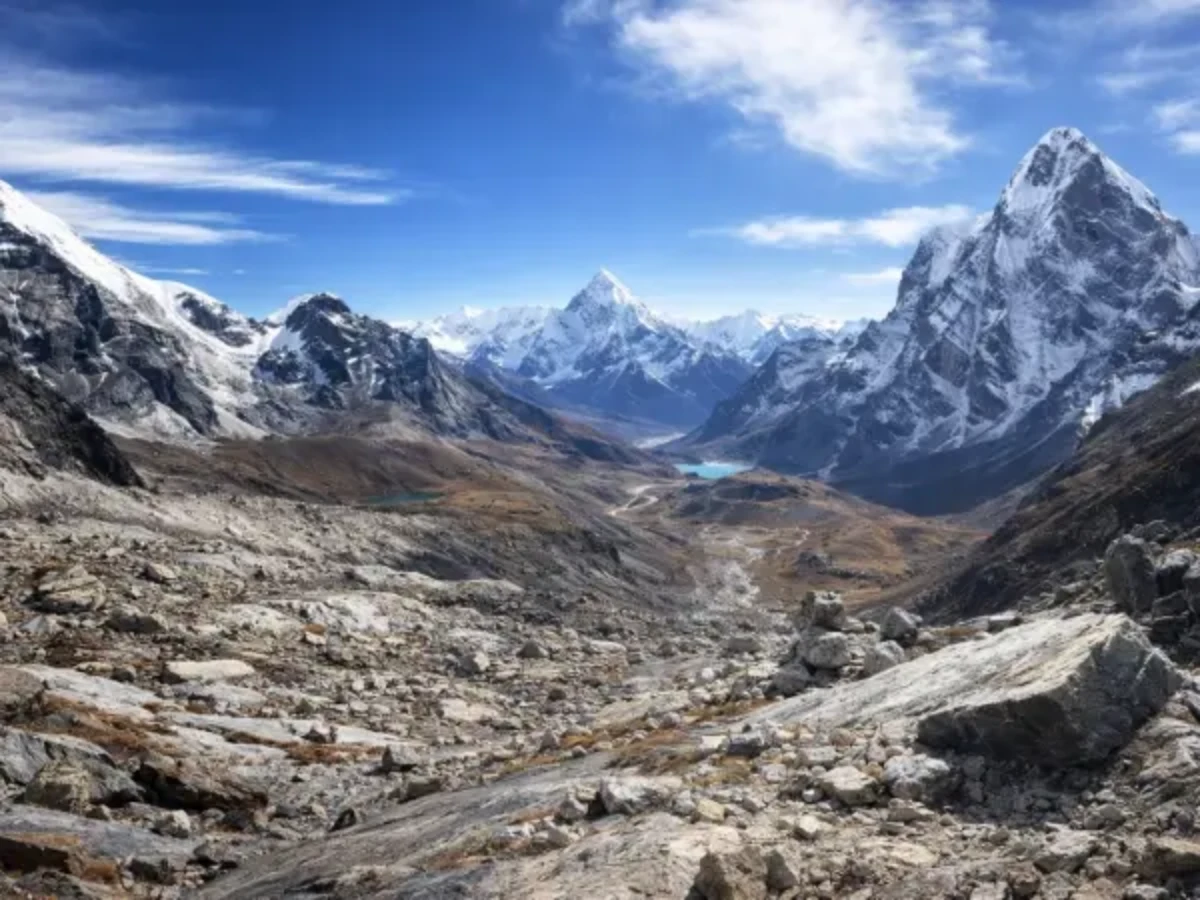
The acclimatisation hike from Ghunsa typically follows the trail north toward Kambachen for two to three hours, climbing to approximately 4,000 metres, before returning to sleep at 3,595. The climb high, sleep low principle is the same as at Namche and Dingboche on the EBC trail, but at Ghunsa the hike is lonelier, you may walk for three hours without seeing another person, and the landscape is wilder. The valley above Ghunsa narrows between glaciated peaks, the vegetation thins, and the specific silence of a valley that receives fewer than two thousand visitors per year settles around you like a physical presence.
An alternative acclimatisation activity is the walk to the yak pastures above the village. The Sherpa families of Ghunsa maintain herds of yak and nak (female yak) that graze the high meadows in summer and descend to the valley in winter. Walking to the pastures, a gentle climb through juniper scrub to the grasslands above, provides altitude exposure and a glimpse of the pastoral economy that has sustained this community for centuries.
Jannu, The Mountain Above
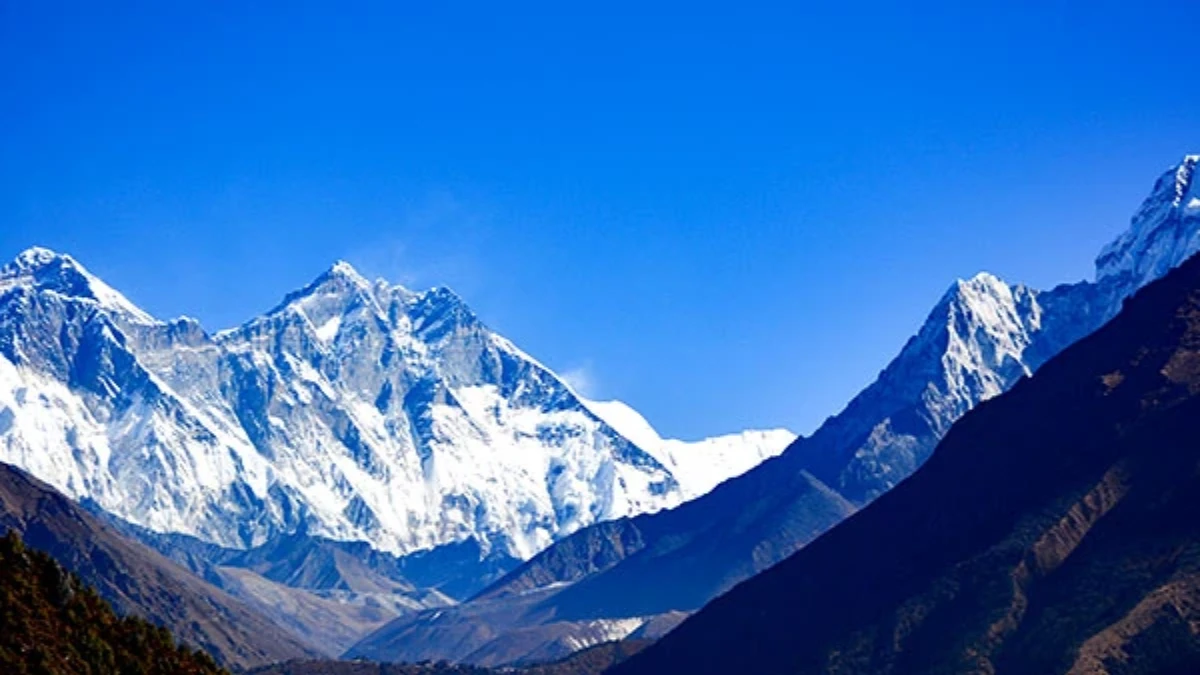
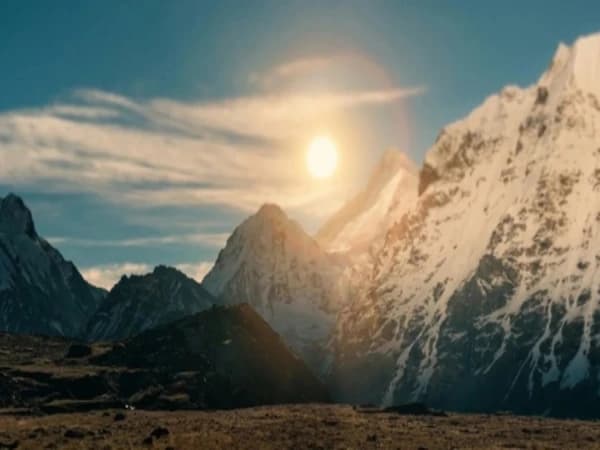
From Ghunsa, the peak that dominates the view is not Kanchenjunga (which is hidden behind the valley's northern ridges) but Jannu, also known as Kumbhakarna, 7,711 metres. Jannu is one of the most aesthetically striking mountains in the Himalaya, a steep, fortress-like pyramid with near-vertical walls on three sides. The mountain was first climbed in 1962 by a French expedition, and its north face, visible from Ghunsa, is considered one of the great Himalayan walls, drawing elite mountaineers with the same magnetism that Everest's south face draws to the Khumbu.
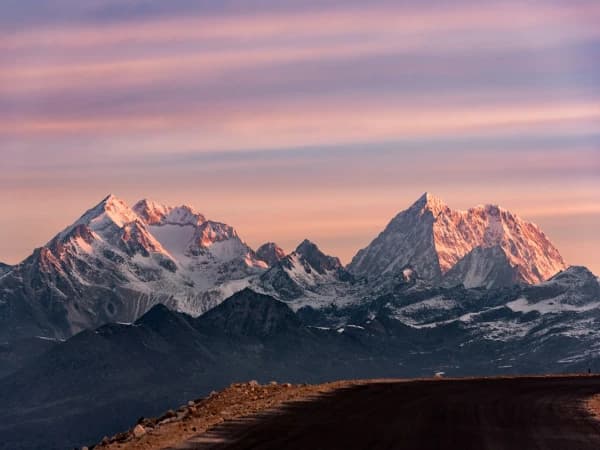
At dawn, Jannu catches the first light while Ghunsa is still in shadow. The summit turns gold, then white, and the ice on its flanks glitters in the morning sun. The mountain is close enough from Ghunsa that individual features, the seracs on the north face, the ridge lines, the bergschrund at the base, are visible without binoculars. And the sound, the distant crack of ice or rock falling from the face, travels across the valley with a clarity that the thin, dry altitude air preserves.
Above Ghunsa: The High Camps
From Ghunsa, the trail continues north to the high camps of the Kanchenjunga trek. The standard route visits two base camps:
North Base Camp (Pangpema, 5,143 metres): Three to four days above Ghunsa via Kambachen and Lhonak. The north face of Kanchenjunga is visible from Pangpema, a massive wall of ice and rock that rises over three thousand metres from base to summit. The camp sits on a glacial moraine, surrounded by peaks above seven thousand metres. The experience is genuinely remote, you may be the only trekking group at Pangpema on any given day.
South Base Camp (Oktang, 4,730 metres): Accessed from Ghunsa via a different valley to the west. The south face of Kanchenjunga is less vertical than the north but equally massive. Oktang is less visited than Pangpema and offers a different perspective on the mountain, the south face catching afternoon light in a way that the north face does not.
The full circuit, north base camp, return to Ghunsa, south base camp, and out, takes eighteen to twenty-one days total. Most trekkers choose one base camp and return, reducing the total to fourteen to sixteen days. Either way, Ghunsa is the pivot, the place you return to from the high camps, the place you rest and recover, and the place where the warmth and oxygen of 3,595 metres feel like a gift after days at five thousand.
Why Ghunsa
Ghunsa is not on any "worth visiting" list. It is not Instagrammed. It is not reviewed on TripAdvisor. It exists in the narrow gap between the guidebook's brief mention and the experienced trekker's detailed recommendation, a place that you find only if someone who has been there tells you about it, or if you choose the Kanchenjunga trek and discover it for yourself.
What you discover is a village that embodies the qualities that mass-tourism trekking routes have gradually lost: genuine remoteness, genuine cultural authenticity, and the genuine experience of arriving somewhere that was not built for you, that does not depend on you, and that welcomes you not because you are a customer but because you walked for five days to get here and the Sherpa tradition of hospitality extends to anyone who makes that effort.
The dal bhat at Ghunsa tastes like dal bhat. The teahouse room looks like every other teahouse room in Nepal. The monastery is small, the village is quiet, and the mountains are the same rock and ice that mountains everywhere are made of. What is different is the context, the five days of walking that precede it, the two thousand trekkers per year who share it, and the knowledge that the third highest mountain on earth is two days' walk north, waiting in a valley that most of the world will never see.
Ghunsa is not a destination that competes with Namche or Pokhara or Kathmandu. It is a destination that exists outside the competition entirely, in a category of its own, defined not by what it offers (which is modest) but by what it requires (which is substantial) and by what it rewards (which is the rarest thing in Himalayan trekking: the feeling of being somewhere that the rest of the world has not yet discovered).
Ghunsa is the main acclimatisation stop on the Kanchenjunga Base Camp Trek, a Tibetan-influenced village where trekkers spend an extra day before heading to the base camps.
Ghunsa is the highest permanent settlement in the Kanchenjunga region and the cultural heart of the trek. The Sherpa monastery, the yak pastures above the village, and the view of Jannu from the trail approaching town: Ghunsa earns its reputation as one of the most beautiful villages in Nepal. You acclimatise here for a day, and that day is one of the best on the entire trek.
Ghunsa is the acclimatisation stop on our Kanchenjunga Base Camp Trek.
WhatsApp:+977 9810351300
Email:[email protected]
Written by Shreejan Simkhada, CEO of The Everest Holiday and third-generation Himalayan guide. TAAN Member #1586.
Ghunsa is the gateway to Kanchenjunga North. Our Kanchenjunga Base Camp Trek (19 Days) is private (your group only, no strangers), 2027 dates open, From USD $1655. WhatsApp us for tailored 2027 dates and current departures.
 Chat with Shreejan