

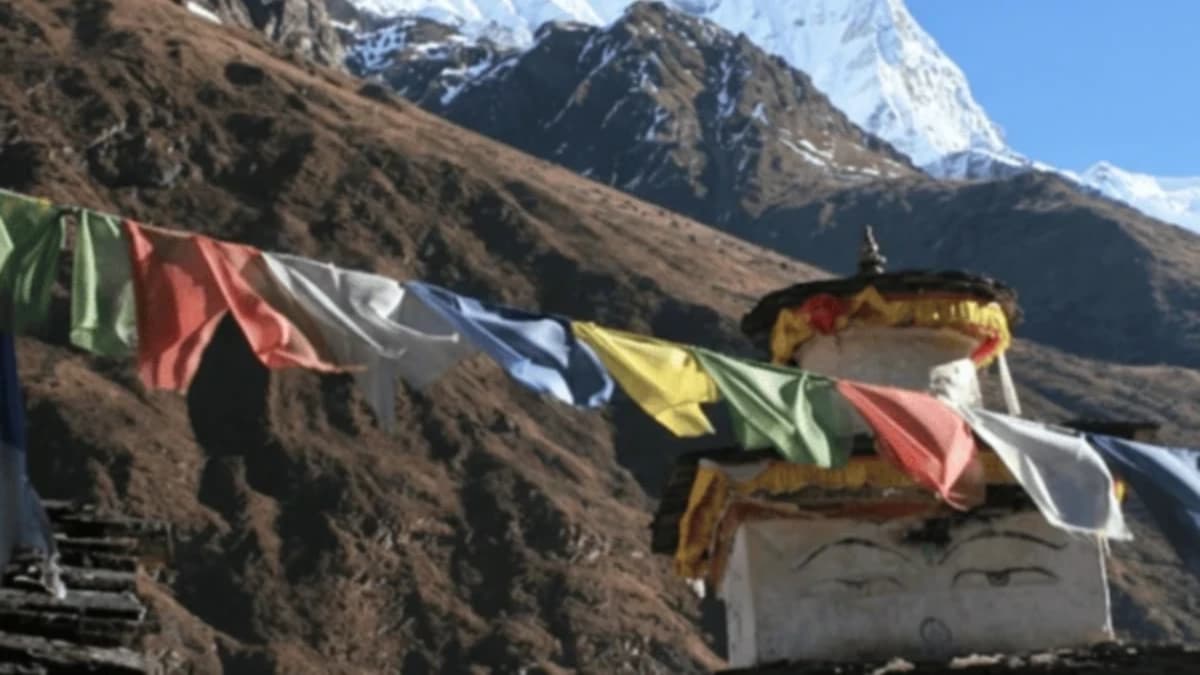
Short answer: Ganesh Himal Base Camp is a remote trek north of Kathmandu through the Ruby Valley and Tamang villages of northern Dhading, below the Ganesh Himal range (up to 7,422 m), and it sees perhaps a few hundred foreign trekkers a year. Teahouses are basic. Walk the region on our Ruby Valley trek.
North of Kathmandu, beyond the tourist buses heading to Langtang and the trekking groups bound for Manaslu, there is a mountain range that most Nepal visitors have never heard of. The Ganesh Himal, named after the elephant-headed Hindu god of beginnings, rises to 7,422 metres in a cluster of seven peaks that straddle the border between Dhading and Gorkha districts. No eight-thousanders. No famous climbing history. No TripAdvisor reviews telling you what to expect. Just mountains, white, massive, and almost entirely unvisited by foreign trekkers.
The Ganesh Himal Base Camp trek is one of Nepal's most genuinely off-the-beaten-path experiences. It passes through the Ruby Valley, named for the rubies historically mined in the region, and the Tamang villages of the northern Dhading hills, in terrain that receives perhaps a few hundred trekkers per year. The teahouses are basic when they exist and nonexistent when they do not. The trails are maintained by the communities that use them, not by trekking agencies. And the mountain views, when they come, when the trail crests a ridge and the Ganesh Himal appears in a wall of ice above the green hills, are views that belong to you and your guide and nobody else.
This is not a trek for beginners. Not because of technical difficulty, the trail does not require crampons or ropes, but because of remoteness. The infrastructure that the EBC trail, the Annapurna Circuit, and even the Manaslu Circuit provide, regular teahouses, established trails, mobile coverage, helicopter evacuation points, does not exist in the Ganesh Himal region. What exists instead is a trail through working agricultural communities, homestay accommodation in village houses, and the specific challenge and reward of walking through a landscape that has not been shaped by tourism.
What Is the Ruby Valley in Nepal?
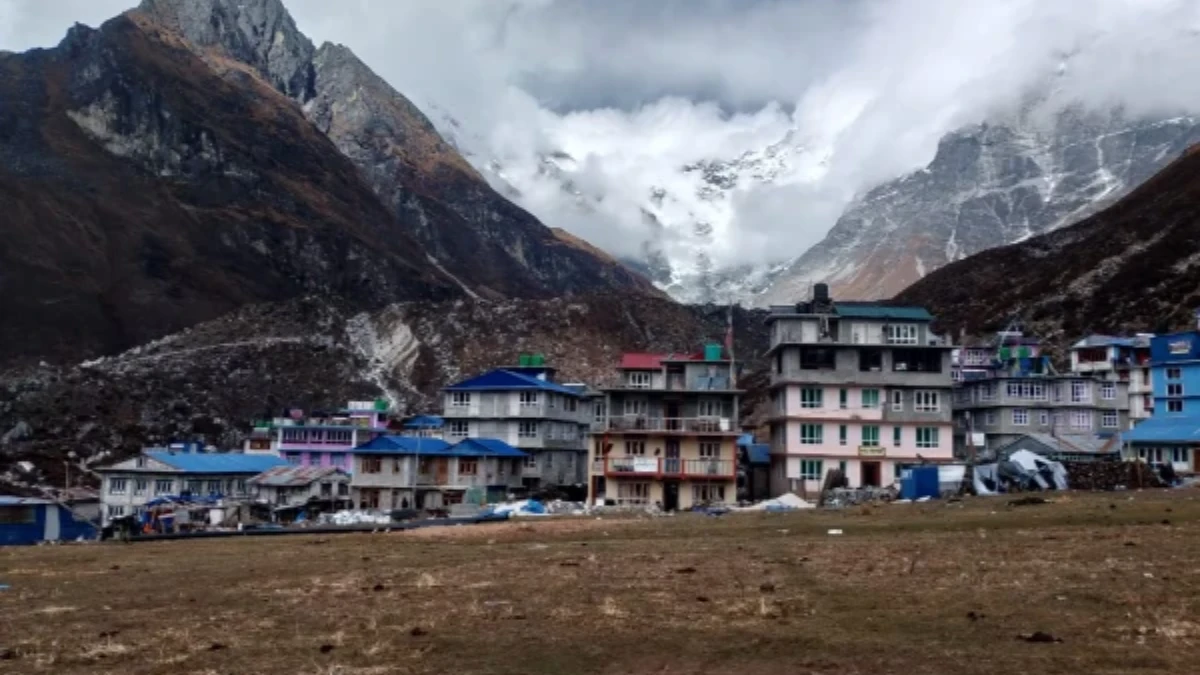
The Ruby Valley, the valley system that the Ganesh Himal Base Camp trek passes through, gets its name from the rubies that were mined in the upper reaches of the Ankhu Khola watershed. The mining is mostly historical now, the easily accessible deposits have been exhausted, and the remaining rubies require industrial extraction that the remoteness of the region makes impractical. But the name persists, and the valley that carries it is one of the most beautiful and least visited in the Nepal Himalaya.
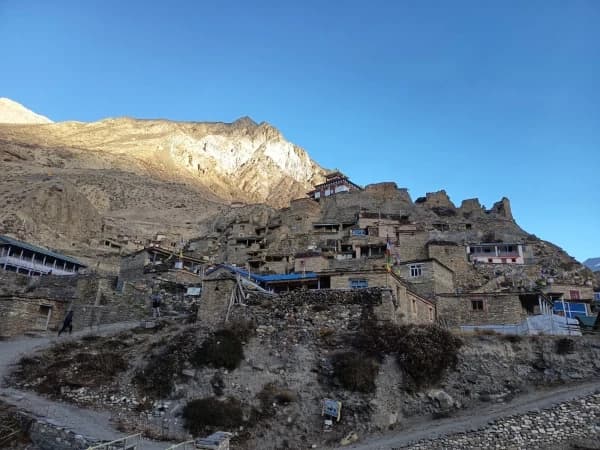
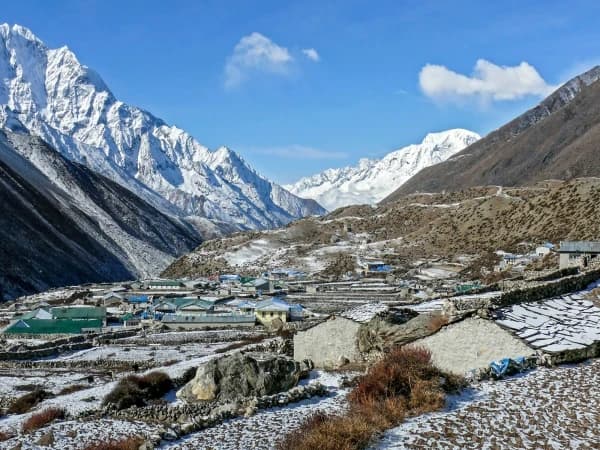
The valley runs north from the Dhading hills toward the Ganesh Himal range, through terrain that transitions from terraced farmland at 1,500 metres to alpine meadow at 4,000 metres. The lower sections are densely populated by Tamang communities, villages of stone houses with slate roofs, terraced fields growing rice, maize, and millet, and the daily rhythms of agricultural life that the higher-altitude trekking regions have supplemented with tourism income.
The Tamang people of the Ruby Valley are culturally Tibetan, they practise Buddhism (primarily the Tamang Buddhist tradition, which blends Nyingma practices with local animist elements), speak a Tibeto-Burman language, and maintain social structures that are distinct from the Hindu-caste system of the lowlands. The Tamang Heritage Trail, which overlaps with parts of the Ganesh Himal approach, was specifically designed to showcase this culture to trekkers and to distribute tourism income to communities that the main trekking routes bypass.
What Is the Ganesh Himal Base Camp Trek Like?
The Ganesh Himal Base Camp trek takes seven to twelve days depending on the route and the starting point. The most common approach starts from Syabrubesi (the Langtang trailhead, seven hours by road from Kathmandu) or from Dhading Besi (four hours by road), and heads north through the Ruby Valley toward the base of the Ganesh Himal range.
The route passes through multiple Tamang villages, Gatlang, Parvati Kunda, Somdang, Tipling, each with its own character, its own monastery, and its own variation on the Tamang cultural pattern. The accommodation at these villages is homestay or basic lodge, not the established teahouse system of the popular routes. You sleep in the family house, eat the family food (dal bhat with fresh vegetables, homemade pickles, and sometimes locally brewed raksi), and experience a version of Nepal that the teahouse trails have replaced with menus in English and rooms with twin beds.
The maximum altitude on the standard Ganesh Himal Base Camp trek is approximately 4,500-4,800 metres, lower than EBC or the Manaslu pass but high enough to require proper acclimatisation. The altitude gain from the trailhead is gradual, the approach through the Ruby Valley takes four to five days, providing natural acclimatisation without the need for dedicated rest days.
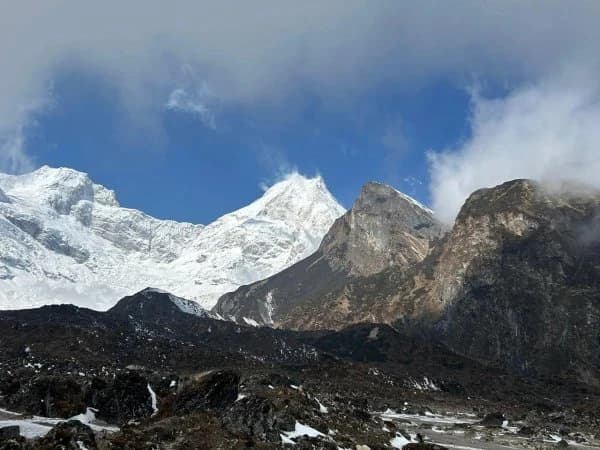
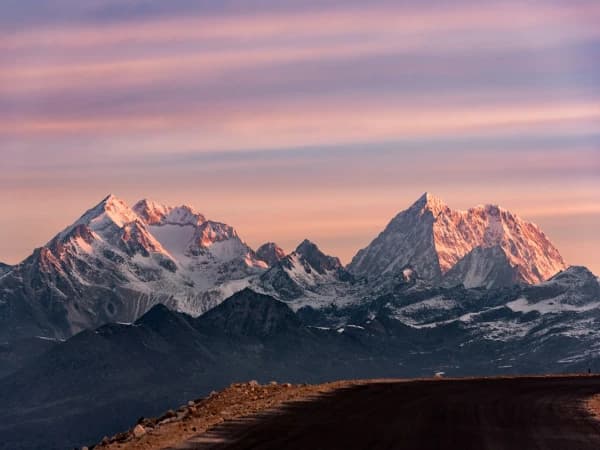
The base camp itself is a glacial moraine at the foot of the Ganesh Himal range, a panoramic viewpoint from which Ganesh I (7,422 metres), Ganesh II, and the surrounding peaks are visible in a semicircle of ice and rock. The experience of arriving at the base camp, after days of walking through villages and forest with no other trekkers in sight, is the thrill of earning a view that nobody else is seeing. No queue. No other headlamps. No Instagram crowd. Just mountains, silence, and the specific satisfaction of having walked far enough from the familiar to find something genuinely new.
Can You Combine Ganesh Himal with Other Treks?
The Ganesh Himal Base Camp trek can be combined with the Langtang Valley trek for a complete two-to-three-week itinerary. The approach from Syabrubesi allows trekkers to walk the Langtang Valley first (to Kyanjin Gompa), then cross to the Ruby Valley via a high ridge, and descend through the Ganesh Himal approach. This combination delivers the Langtang glacier experience and the Ruby Valley cultural immersion in a single trip, two dramatically different trekking environments connected by a ridge crossing that provides views of both ranges.
The Tamang Heritage Trail, a shorter, lower-altitude trek through the Tamang villages west of the Langtang Valley, can also be combined with the Ganesh Himal approach for a culturally focused itinerary. This combination emphasises Tamang culture over mountain scenery and is suitable for trekkers more interested in community interaction than high-altitude achievement.
What Do You Need to Know About Ganesh Himal?
Duration: seven to twelve days depending on route. Maximum altitude: 4,500-4,800 metres. Difficulty: moderate to challenging (remoteness rather than technical difficulty). Permits: Langtang National Park entry if approaching from Syabrubesi, plus TIMS card. No restricted area permit.
Accommodation: homestay and basic lodge in the lower sections. Camping may be required for the upper sections and base camp. Your trekking company arranges the accommodation and camping logistics.
Best season: October-November (clear, cold) and March-May (warmer, rhododendron bloom in the lower valleys).
Access: Kathmandu to Syabrubesi (seven to eight hours by road) or Kathmandu to Dhading Besi (four hours). No domestic flights required.
Why Ganesh Himal
The Ganesh Himal Base Camp trek is for the trekker who has done the popular routes and wants to see Nepal without the filter of tourism infrastructure. Not better than EBC. Not better than Annapurna. Different. Different in the way that a village house is different from a teahouse, that a homestay meal is different from a menu, and that a mountain nobody has heard of is different from a mountain everybody has photographed.
The Ganesh Himal range does not need your visit. The Ruby Valley does not depend on your booking fee. The Tamang villages will continue their agricultural rhythms whether you walk through or not. And this independence, this quality of existing without reference to tourism, is what makes the Ganesh Himal trek feel not like a product consumed but like a place visited. A place where the welcome is genuine because it is not commercial, where the trail exists because people use it and not because trekkers need it, and where the mountains, seven thousand metres of ice and rock named after the god of beginnings, wait at the end of a valley that most of the world does not know exists.
See our Nepal treks for Ganesh Himal options.
Ganesh Himal is the mountain range that Kathmandu residents see every clear morning but almost no trekker visits. The base camp trek passes through Ruby Valley, Tamang villages, and alpine meadows with views of seven peaks named after the elephant god. If you want a trek where you are genuinely the only foreigner on the trail, this is it.
See our Ruby Valley Trek which approaches the Ganesh Himal range.
WhatsApp:+977 9810351300
Email:[email protected]
Written by Shreejan Simkhada, CEO of The Everest Holiday and third-generation Himalayan guide. TAAN Member #1586.
Ganesh Himal is the Ruby Valley range: try our 9-day. Our Ruby Valley Trek (9 Days) is private (your group only, no strangers), 2027 dates open, From USD $560. WhatsApp us for tailored 2027 dates and current departures.
Villages of the Ruby Valley and Ganesh Himal
This is our team's home district. Village-by-village notes from the people who grew up on these trails:
 Chat with Shreejan