

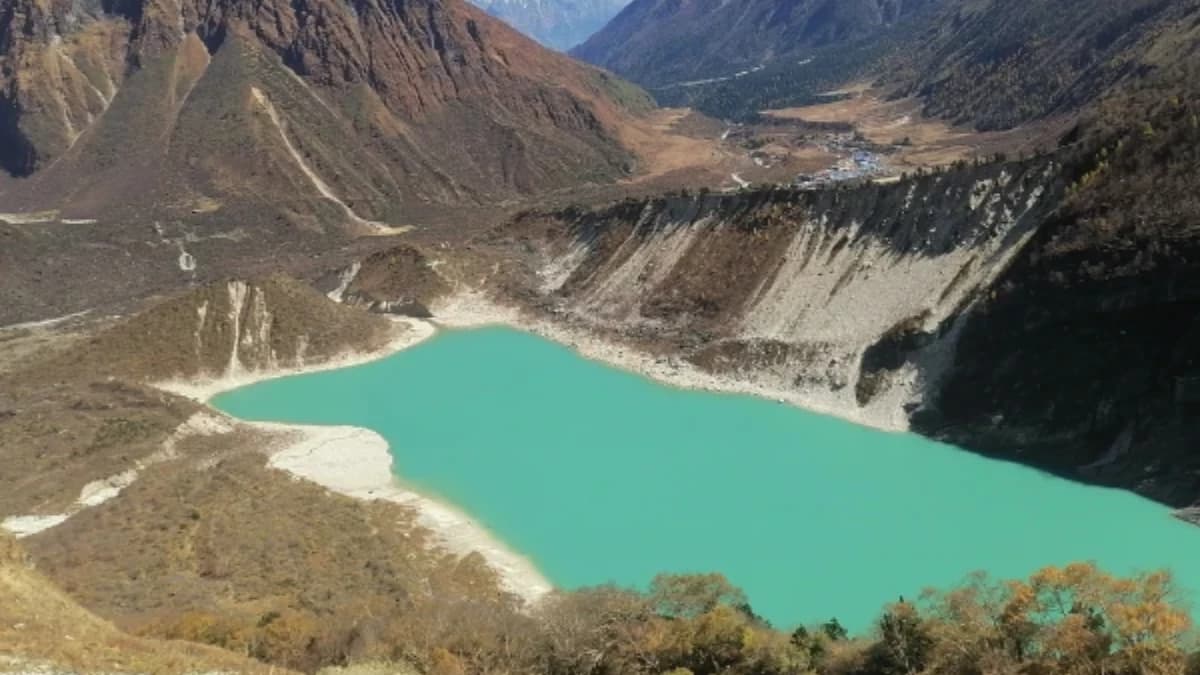
Above Samagaon, up a steep trail that takes about two hours of steady climbing, there is a glacial lake the colour of a swimming pool. Birendra Tal sits at the foot of the Manaslu massif, and on a still morning the mountain reflects perfectly in the water. Located in the Manaslu region, this striking turquoise lake sits quietly above the traditional village of Samagaon, surrounded by towering Himalayan peaks and rugged glacial terrain. While many trekkers pass through Samagaon on the Manaslu Circuit Trek, only those who take the time to hike up to Birendra Tal get to see the raw and untouched beauty of this area.
Unlike popular lakes in the Everest or Annapurna regions, Birendra Tal remains peaceful and uncrowded. There are no lodges or shops by the lake, no noise except the wind and distant sound of melting ice. This sense of isolation is what makes Birendra Tal special. It is a place where nature feels powerful, pure, and deeply calming.
Where Is Birendra Tal on the Manaslu Circuit?
Birendra Tal is located in Gorkha District, within the Manaslu Conservation Area of northern Nepal. The lake lies at an altitude of approximately 3,700 metres above sea level, just a short hike from Samagaon village, which itself sits at around 3,530 metres.
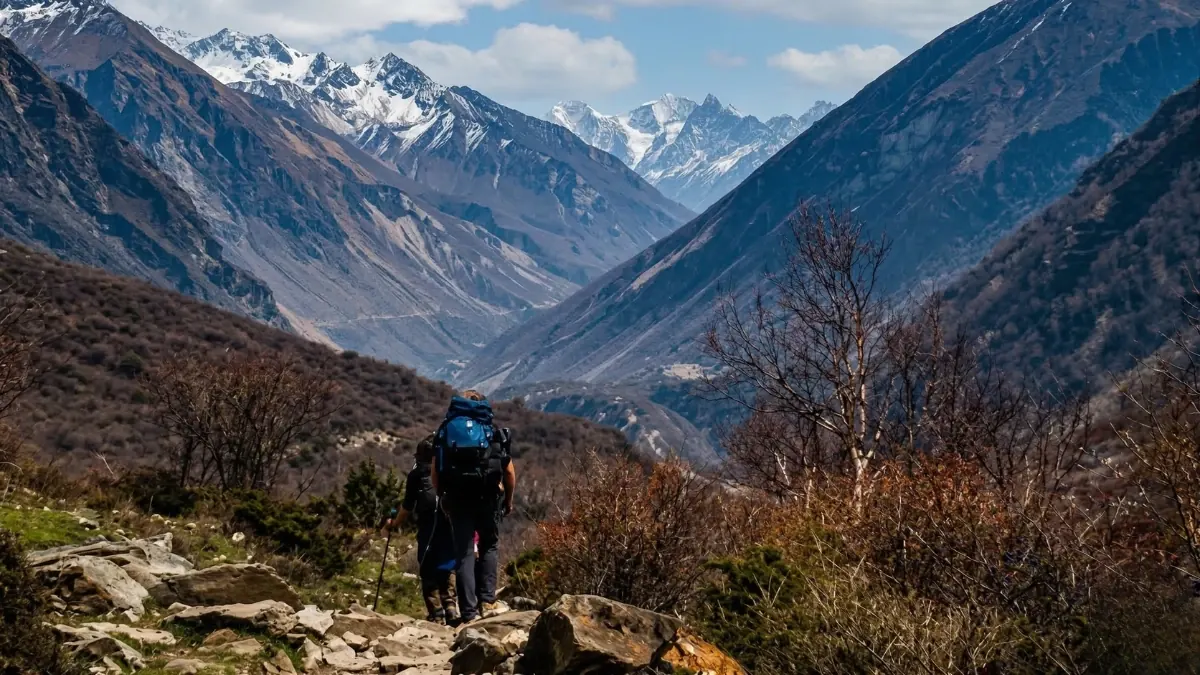
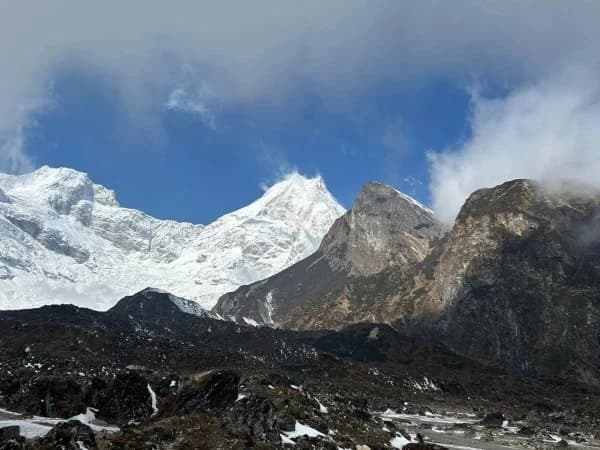
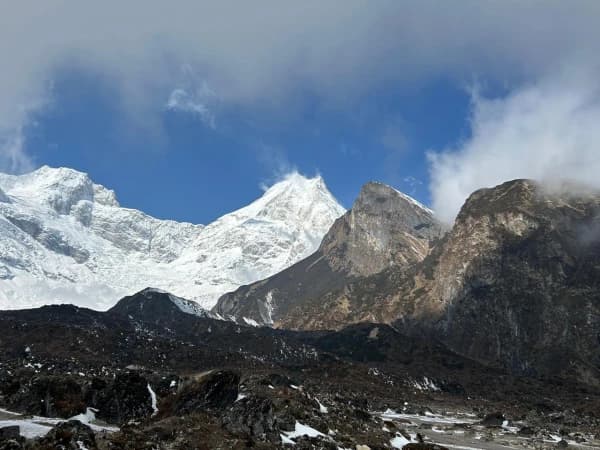
The lake is formed by meltwater from the Manaslu Glacier, which descends from Mount Manaslu (8,163 metres), the eighth-highest mountain in the world. Because of its glacial origin, Birendra Tal has a distinct milky turquoise colour, created by fine mineral particles suspended in the water.
From the lake, trekkers can enjoy views of surrounding peaks and moraines, with the wide Manaslu Valley stretching below.
Why Is Birendra Tal Named After a King?
Birendra Tal is named in memory of King Birendra Bir Bikram Shah Dev, the former king of Nepal. While the lake itself is a natural formation, its name holds national significance and respect.
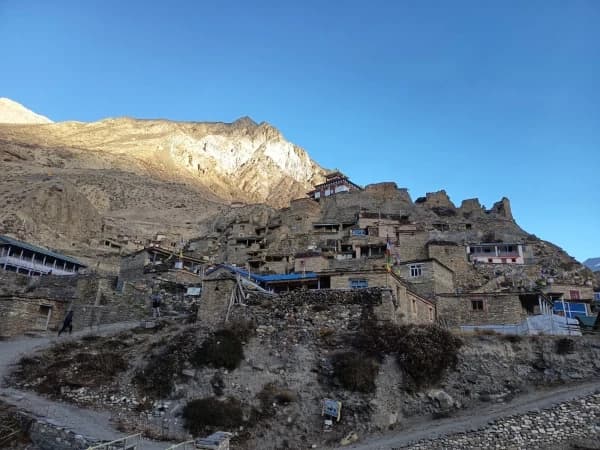
For the local Nubri people of Samagaon, the lake and surrounding mountains are part of a sacred landscape. The Himalayas are not seen only as geographical features but as living elements connected to spirituality, tradition, and daily life. Many locals believe that water sources and glaciers must be respected, as they provide life to the valley below. Because of this cultural respect, Birendra Tal has remained well preserved, with minimal human impact.
What Does Birendra Tal Look Like?
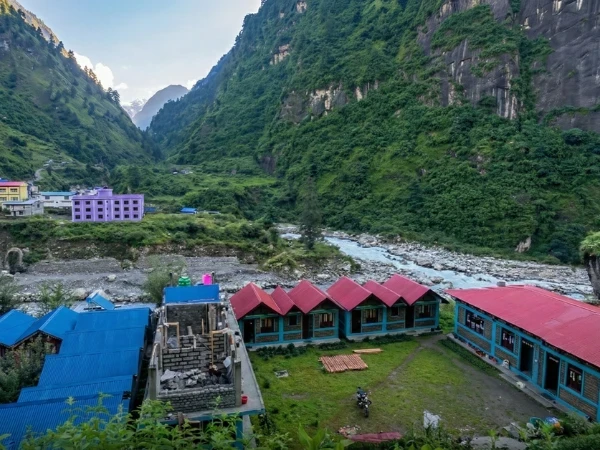
What immediately stands out at Birendra Tal is its colour. Depending on the light and season, the lake shifts between shades of turquoise, green, and deep blue. The contrast between the bright water, grey moraine walls, and brown alpine vegetation creates a dramatic and lasting scene.
On one side, steep glacial ridges rise sharply, showing layers of rock and ice shaped over thousands of years. On the other side, the land opens toward the valley, offering a sense of space and scale that makes the lake feel even more remote.
In autumn, the surrounding hills display subtle golden and brown tones, while spring brings patches of green and blooming alpine plants. During winter, parts of the lake may freeze, adding a different kind of beauty, though access becomes more challenging.
Birendra Tal as an acclimatisation Hike
One of the main reasons trekkers visit Birendra Tal is acclimatisation. Samagaon is an important rest day on the Manaslu Circuit Trek, especially before attempting the high Larkya La Pass. A hike to Birendra Tal allows trekkers to gain altitude gradually and then return to sleep at a lower elevation.
The hike usually takes 1 to 2 hours one way, depending on pace. The trail climbs steadily over rocky and uneven terrain but does not require technical skills. This makes it suitable for most trekkers who are reasonably fit and acclimatised.
By combining physical activity with mountain scenery, the hike to Birendra Tal is both practical and rewarding.
How to Reach Birendra Tal
Birendra Tal is accessed during the Manaslu Circuit Trek, which typically starts from Machha Khola or Arughat. The trek follows the Budhi Gandaki River through deep gorges, terraced villages, suspension bridges, and forested trails before reaching higher alpine landscapes.
After reaching Samagaon, trekkers usually take a half-day hike to Birendra Tal. The trail begins from the upper part of the village and gradually ascends toward the glacial area. While the path is visible, it can be rocky and loose in places, so careful footing is important. Because the Manaslu region is a restricted area, trekking with a licensed guide is mandatory.
When Is the Best Time to Visit Birendra Tal?
The best seasons to visit Birendra Tal are spring (March to May) and autumn (September to November).
During spring, the weather becomes warmer, snow begins to melt, and the landscape slowly comes alive. Autumn offers the clearest skies, stable weather, and sharp mountain views, making it the most popular season for trekking in the Manaslu region.
Winter brings heavy snowfall and freezing temperatures, which can make the trail difficult or inaccessible. The monsoon season (June to August) brings rain, landslides, and cloudy conditions, reducing visibility and trail safety.
Permits and Practical Information
To visit Birendra Tal, trekkers must obtain the following permits:
-
Manaslu Restricted Area Permit
-
Manaslu Conservation Area Permit (MCAP)
-
Annapurna Conservation Area Permit (ACAP), depending on route
A licensed trekking guide is compulsory, and trekking independently is not allowed in the Manaslu region.
There are no facilities at Birendra Tal itself. Trekkers should carry water, snacks, sun protection, and warm clothing. Weather can change quickly at this altitude, so layered clothing and proper footwear are essential.
Why Birendra Tal Is Worth Visiting
Birendra Tal is not just a scenic stop; it is something that captures the essence of the Manaslu region. Its quiet setting, untouched surroundings, and powerful glacial landscape offer something that many popular trekking destinations have lost: a feeling of purity and solitude. Standing beside the lake, with the Manaslu Glacier above and the wide valley below, trekkers often feel a deep sense of connection to nature. There are no crowds, no distractions, just mountains, water, and silence.
For those who seek a genuine Himalayan experience, Birendra Tal remains one of Nepal’s most rewarding lesser-known spots.
Related Treks & Guides
- Tsum Valley and Manaslu Circuit Trek
- Tsum Valley Trek
- Manaslu Circuit Trek
- Dharmashala & Jagat
- Bhimtang
Birendra Lake sits below the Manaslu glacier at 3,450 metres, and the reflection of Manaslu in its still waters is one of the defining photographs of the circuit. You walk here from Samagaon on your acclimatisation day, and the two hours it takes to reach the lake are two of the most beautiful hours on the entire trek.
Birendra Lake is the acclimatisation walk on our Manaslu Circuit Trek.
WhatsApp:+977 9810351300
Email:[email protected]
Written by Shreejan Simkhada, CEO of The Everest Holiday and third-generation Himalayan guide. TAAN Member #1586.
Birendra Tal is the Manaslu Circuit glacial lake. Our Manaslu Circuit Trek (12 Days) is private (your group only, no strangers), 2027 dates open, From USD $799. WhatsApp us for tailored 2027 dates and current departures.
Continue planning your trek
This is one stop on the Manaslu Circuit trail. For the full route, read our complete Manaslu region guide. When you are ready for dates and prices, see the Manaslu Circuit Trek (12 days) or WhatsApp us directly. We reply personally.

 Chat with Shreejan